
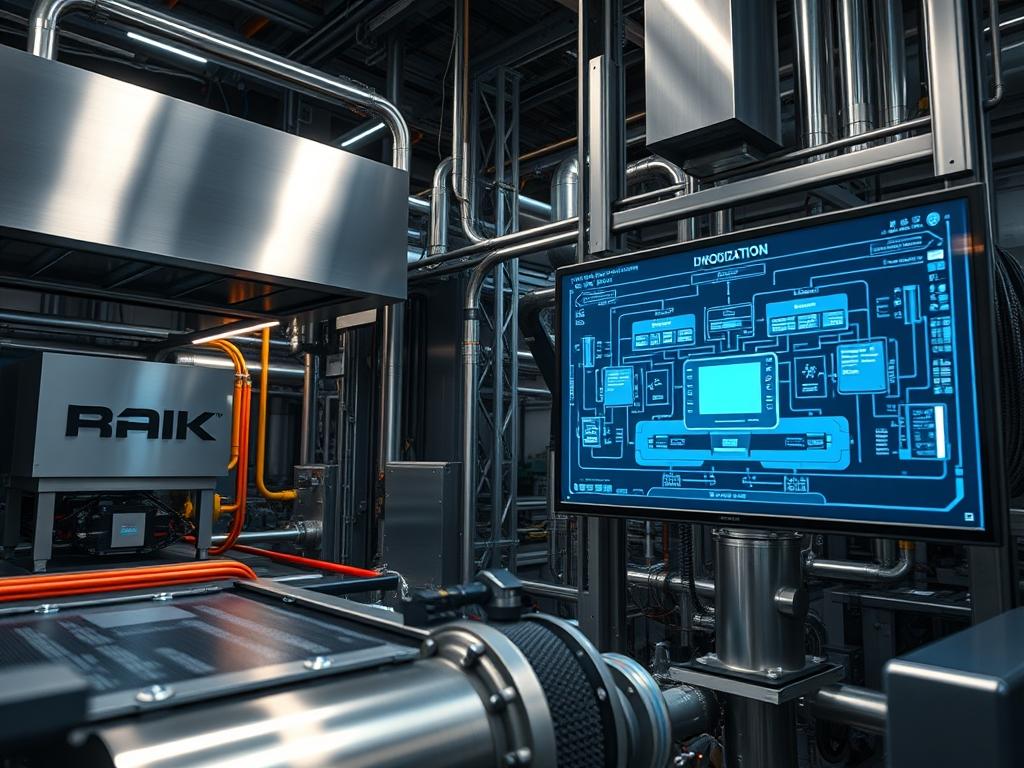
Anodization is a critical electrochemical process utilized to transform the mechanical surface of aluminum frames into a durable, corrosion-resistant, and aesthetically consistent finish. In the context of large-scale infrastructure, such as high-density server racks, satellite chassis, or energy grid enclosures, the Anodization Process functions as the final layer of the hardware stack. It provides the necessary physical encapsulation to protect complex electronics from environmental degradation. The failure of a frame surface can lead to particulates or structural warping; this introduces physical latency in maintenance routines and risks localized short circuits. By migrating from simple coatings to a structured electrolytic oxide layer, engineers ensure that the physical infrastructure maintains high thermal-inertia and avoids signal-attenuation caused by surface oxidation interference. This manual outlines the architecture required to implement a Type II or Type III Anodization Process, ensuring that the hardware payload remains protected throughout its operational lifecycle.
Technical Specifications
| Requirement | Default Operating Range | Protocol/Standard | Impact Level | Recommended Resources |
| :— | :— | :— | :— | :— |
| Electrolyte Concentration | 180 to 200 g/L (H2SO4) | ASTM B117 | 9 | High-Grade Sulfuric Acid |
| Tank Temperature | 18 to 22 degrees Celsius | ISO 9001:2015 | 8 | 5-ton Industrial Chiller |
| Current Density | 12 to 15 Amps/Sq. Ft. | MIL-A-8625 Type II | 10 | 1000A DC Rectifier |
| Sealant PH Level | 5.5 to 6.5 pH | MIL-STD-171 | 7 | Deionized Water (DI) |
| Voltage Regulation | 12 to 24 Volts DC | IEEE 1100 | 9 | PLC-Logic-Controller |
The Configuration Protocol
Environment Prerequisites:
Technical implementation requires adherence to MIL-A-8625 specifications for anodic coatings. The facility must be equipped with a high-current DC power supply capable of maintaining constant current density. All operators must have Level-3-Safety permissions for handling hazardous acids. The system utilizes MODBUS-TCP or PROFINET protocols for sensor communication between the tank immersion sensors and the central management console. Physical dependencies include a source of deionized water with a conductivity rating of less than 10 microsiemens/cm to prevent electrolyte contamination.
Section A: Implementation Logic:
The Anodization Process relies on the principle of electrolytic oxidation. Unlike traditional spray-on coatings that act as an external payload, anodizing grows the protective layer directly from the aluminum substrate. This creates a cohesive bond that prevents the peeling or delamination often seen in humid data center environments. By controlling the current density and the temperature of the sulfuric acid bath, we can manipulate the porosity of the oxide layer. This allows for the subsequent encapsulation of dyes or specialized sealants. The engineering design prioritizes throughput by automating the ramp-up of voltage to overcome the initial resistance of the aluminum oxide barrier layer; this ensures an idempotent result across thousands of individual frames.
Step-By-Step Execution
1. Surface Degreasing and Initialization
Load the aluminum frame into the ISO-CHEM-CLEAN tank. Execute the degreasing sequence via the systemctl start tank-agitation command on the control terminal.
System Note: This step removes mechanical oils and fingerprints. It ensures the surface state is idempotent before the chemical reaction begins. Failure to remove lipids results in uneven current distribution and localized hotspots.
2. Alkaline Etching Procedure
Submerge the workpiece into the caustic soda bath for 120 seconds. Monitor the etch-rate-monitor to ensure a uniform removal of 0.001 inches of surface material.
System Note: Etching increases the total surface area by removing the natural, inconsistent oxide layer. Use a fluke-multimeter to verify grounding points on the racking gear to prevent electrical arcing during subsequent steps.
3. De-oxidation and Desmutting
Neutralize the alkaline residue by immersion in the NITRIC-BUFFER-TANK. The process must continue until all alloying elements, such as copper or silicon, are stripped from the surface.
System Note: This creates a chemically pure surface. In terms of engineering logic, this reduces the noise in the electrochemical circuit, allowing for a cleaner “signal” during the anodizing phase.
4. Electrolytic Bath Initialization
Activate the DC-Rectifier-Main and ramp the voltage to 15V over a 2-minute interval. Maintain a constant current density of 12 ASF while the industrial-chiller maintains the temperature at 20 degrees Celsius.
System Note: As the oxide layer grows, the electrical resistance increases. The PLC-Logic-Controller must proactively increase voltage to maintain the desired current throughput. This prevents “packet-loss” of the ion flow, ensuring the oxide thickness remains within the 0.5 to 1.0 mil specification.
5. Hydrothermal Sealing and Encapsulation
Transfer the anodized frame to the DI-SEAL-TANK maintained at 98 degrees Celsius. Let the component dwell for 20 minutes to transition the aluminum oxide to boehmite.
System Note: This step provides the final encapsulation of the porous structure. This reduces the surface’s thermal-inertia variability and ensures that environmental contaminants cannot penetrate the grain boundaries of the frame.
Section B: Dependency Fault-Lines:
The most common failure in the Anodization Process is “Burning,” where a current spike occurs due to high local conductivity. This is often caused by a mechanical bottleneck in the racking system where the contact point is too small for the required payload of current. Another critical fault-line is electrolyte exhaustion; if the aluminum concentration in the acid bath exceeds 20 g/L, the process becomes inefficient, leading to high energy overhead and a powdery finish. Ensure that all MODBUS sensor cables are shielded to prevent EM interference from the high-amperage rectifiers, which can cause jitter in the temperature readings.
The Troubleshooting Matrix
Section C: Logs & Debugging:
Verify the process integrity by reviewing logs stored in /var/log/anodize/controller.log. Look for specific error strings that indicate hardware or chemical drift.
1. ERR_V_SPIKE_802: Indicates a short circuit or loose rack contact. Check physical bus-bar connections and tighten the titanium-clips.
2. TEMP_OVR_CRIT: The chiller is failing to compensate for the exothermic reaction. Check the coolant-pressure-gauge and ensure the heat exchanger is not fouled.
3. PH_DRIFT_LOW: The seal tank has become acidic. This indicates insufficient rinsing between the acid bath and the seal. Check the rinse-tank-2 flow rate.
4. THICKNESS_UNDER_SPEC: This usually correlates with low current density. Check the rectifier for “ripple” or “signal-attenuation” in the output leads. Use a fluke-multimeter to measure the voltage drop across the tank.
Visual cues are also vital. A “pitted” surface indicates that the etch time was too long or the temperature was too high. A “rainbow” or iridescent effect suggests that the oxide layer is too thin, often a result of low voltage latency during the initial ramp-up phase.
Optimization & Hardening
– Performance Tuning: To maximize throughput, implement pulse-current anodizing. This involves cycling the current on and off at high frequencies. This technique manages the “thermal-inertia” of the barrier layer and allows for faster oxide growth without burning the material. It effectively increases the concurrency of ion movement through the electrolyte.
– Security Hardening: Physical safety is the primary security concern. Configure the Emergency-Stop-Logic to be physically decoupled from the main PLC software to ensure a fail-safe shutdown in the event of a kernel panic or network failure. Use a hardware-based Firewall-Gateway to isolate the industrial control network from the corporate LAN, preventing unauthorized access to the chemical dosing parameters.
– Scaling Logic: For higher volumes, transition from a batch process to a continuous automation line. Maintain a “Master-Worker” architecture where the central server manages the timing for multiple tanks simultaneously. As traffic (material volume) increases, add secondary rectifiers in a parallel configuration to distribute the electrical load and prevent a single point of failure in the power delivery network.
The Admin Desk
How do I handle a “Powdery” finish?
A powdery surface usually indicates the bath temperature was too high or the immersion time was excessive. Check the /etc/anodize/config.yaml file to adjust the immersion timer and verify that the chiller is reaching its set point.
What is the fix for uneven dye absorption?
This is often caused by poor rinsing leaving acid “payload” in the pores. Ensure the Rinse-Tank-1 has a high turnover rate. Check the DI-Water-Sensor for high conductivity readings indicating contamination.
Can I anodize 6061 and 7075 aluminum together?
No. Different alloys have different electrical resistance profiles. Processing them concurrently in the same tank will result in “load-balancing” issues, where one alloy draws more current, causing the other to be under-processed or burned.
How do I verify the seal quality?
Perform a “Stain Test” per ASTM-B136. Apply a drop of dye to the surface. If the stain remains after rinsing, the encapsulation is incomplete. Increase the dwell time in the DI-SEAL-TANK by 5 minutes.
Why is my rectifier triggering an over-current alarm?
Check for a “Ground-Loop” within the tank lining. If the lead lining is touching the aluminum rack, the current will bypass the workpiece. Inspect the Tank-Insulators for cracks or debris that may bridges the gap.