
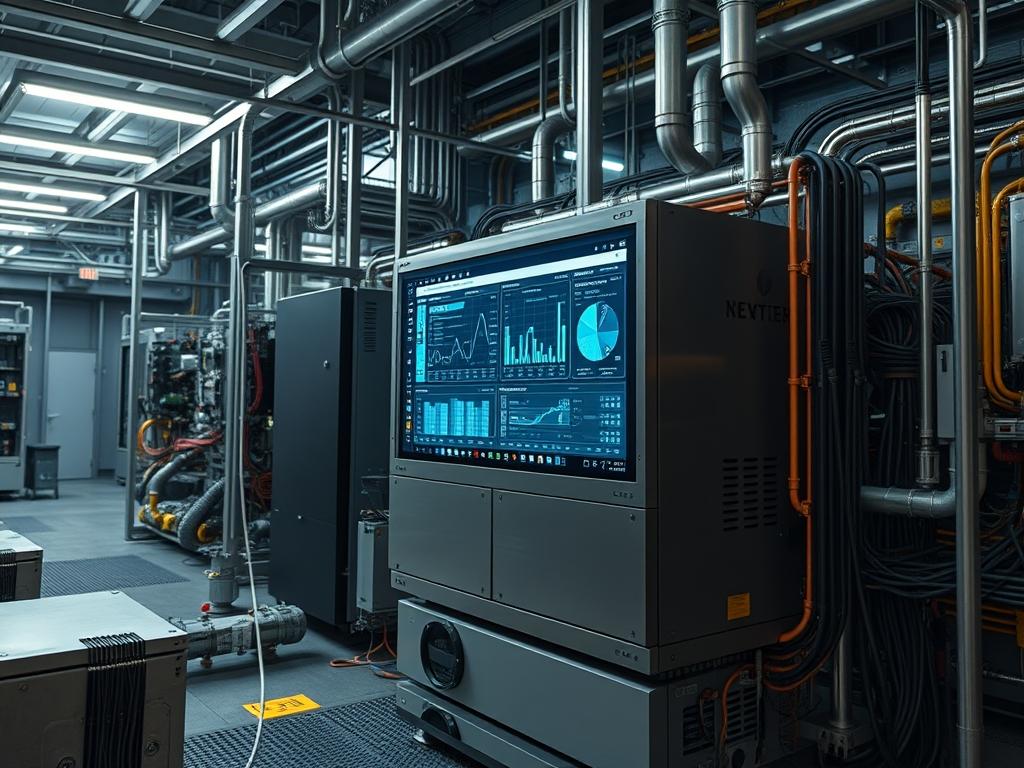
The power conversion architecture in high-density energy environments often utilizes a DC-to-AC ratio greater than 1.0 to maximize energy harvest throughout the diurnal cycle. Inverter Clipping Explained refers to the operational state where the DC input power from a localized source, such as a photovoltaic array or a battery storage string, exceeds the maximum AC output capacity of the power conversion system. This phenomenon is a deliberate engineering trade-off designed to optimize the capacity factor of the infrastructure. By oversizing the DC source, engineers ensure that the inverter operates at its peak efficiency plateau for longer durations during periods of low irradiance or discharge. When the DC energy peak arrives, the inverter firmware uses Maximum Power Point Tracking (MPPT) logic to shift the operating point along the V-I curve. This shift increases the DC voltage and decreases the current, effectively restricting the energy throughput to the inverter’s rated AC limit. This process protects internal components like the Insulated-Gate Bipolar Transistor (IGBT) modules from overcurrent conditions while maintaining a stable frequency and voltage output to the grid or local bus.
| Parameter | Value |
| :— | :— |
| DC-to-AC Design Ratio | 1.2:1 to 1.5:1 |
| Operating Temperature Range | -25C to +60C |
| MPPT Efficiency | >99.0% |
| Total Harmonic Distortion (THD) | <3% at rated power |
| Communication Protocols | Modbus TCP, RS-485, SunSpec |
| Grid Compliance Standards | IEEE 1547, UL 1741 SA/SB |
| Ingress Protection | IP65 / NEMA 3R or 4X |
| Switching Frequency | 16 kHz to 20 kHz (typical) |
| Cooling System | Forced Convection or Liquid Cooling |
| Isolation Resistance | >1 Megohm |
Environment Prerequisites
Installation of oversized DC systems requires a site-specific calculation of the Maximum DC Input Voltage (Voc) at the lowest expected ambient temperature to prevent hardware destruction. The controller hardware must support SunSpec Modbus protocols for granular data logging. Firmware must be updated to the latest vendor-validated version to ensure the MPPT algorithms handle rapid irradiance transients without oscilation. The physical infrastructure requires adequate thermal clearance around the inverter chassis to manage the thermal inertia generated during sustained clipping operations.
Implementation Logic
The engineering rationale for allowing inverter clipping centers on the cost-per-kWh optimization. Most inverters reach peak conversion efficiency at 70% to 100% of their rated load. By overclocking the DC side, the system reaches this efficiency window earlier in the morning and maintains it later into the evening. The implementation logic relies on the MPPT controller’s ability to move the operating point away from the maximum power point (MPP) toward the open-circuit voltage (Voc). This operational shift is idempotent: it does not alter the physical state of the DC source but merely changes the electrical resistance presented to the circuit. The encapsulation of this logic within the inverter firmware allows for autonomous regulation of power throughput without external controller intervention, minimizing latency in response to grid frequency fluctuations.
Configuration of MPPT Thresholds
Access the inverter configuration interface via a direct RS-485 connection or a Modbus TCP gateway. Navigate to the DC input settings and define the upper voltage limits and maximum current parameters. The MPPT controller must be set to recognize the specific curve of the connected DC source.
“`bash
Example Modbus register write to set Max AC Output Power (Limit)
Address 40232: WMaxLimPct (Percentage of maximum power)
modbus_client –write-register 40232 –value 100 –port 502 –unit 1 192.168.1.50
“`
Internal modification: This command updates the non-volatile memory of the inverter controller, instructing the IGBT gate drivers to cap the duty cycle of the PWM (Pulse Width Modulation) signal once the AC output reaches the setpoint.
System Note: Use a Fluke multimeter to verify DC string voltage before commissioning. Ensure the Voc does not exceed the inverter maximum input rating under any thermal condition.
Integration of Real-Time Monitoring
Deploy a daemonized service on a local edge gateway to poll inverter telemetry via SNMP or MQTT. This service monitors the Gap Power, which is the difference between available DC power and actual AC throughput.
“`python
Snippet for monitoring clipping state via SunSpec Modbus
import pymodbus.client as ModbusClient
client = ModbusClient.TcpClient(‘192.168.1.50’, port=502)
res = client.read_holding_registers(address=40083, count=2) # AC Power registers
ac_power = res.registers[0]
if ac_power >= RATED_CAPACITY * 0.99:
print(“Inverter State: Clipping Active”)
“`
Internal modification: This monitoring script tracks the duration of clipping events. Continuous clipping indicates that the system is operating at its maximum throughput, which increases the thermal load on the internal capacitors and switching magnetics.
System Note: Monitor the syslog or journalctl output on the edge gateway for any timeout errors in the Modbus polling loop, which could indicate signal attenuation on long cable runs.
Thermal Management Calibration
Verify the activation setpoints for the internal cooling fans or liquid cooling pumps. Clipping generates significant waste heat due to the high current density in the bridge rectifiers.
“`bash
Check fan controller status via CLI if available (Manufacturer specific)
inverter-cli –get-sensor-data | grep “Fan_Speed”
inverter-cli –get-sensor-data | grep “Heatsink_Temp”
“`
Internal modification: The controller increases the fan RPM based on the heatsink thermal sensor. If the temperature exceeds the safety threshold, the inverter will initiate a secondary derating protocol, further reducing power beyond the planned clipping limit.
System Note: Use a thermal sensor or infrared camera to identify hotspots on the DC combiners and AC disconnects during peak clipping hours.
Dependency Fault Lines
- Thermal Bottlenecks:
* Root Cause: Dust accumulation on heatsinks or fan failure.
* Symptoms: Inverter output drops below the clipping limit despite high DC availability.
* Verification: Check internal temperature registers via Modbus.
* Remediation: Clean intake filters and verify fan rotation via systemctl status on the controller daemon.
- Voltage Rise at PCC:
* Root Cause: High impedance on the AC service line.
* Symptoms: Inverter disconnects with a Grid Overvoltage error (e.g., Error 301).
* Verification: Measure AC voltage at the inverter terminals using a Fluke multimeter during peak production.
* Remediation: Increase AC conductor size or adjust the volt-watt response curve in the inverter settings.
- MPPT Desynchronization:
* Root Cause: Rapid cloud passage causing the MPPT to search the V-I curve.
* Symptoms: High-frequency oscillation in power output (hunting).
* Verification: Inspect high-resolution power logs for sawtooth patterns.
* Remediation: Update firmware to improve MPPT dampening factors.
Troubleshooting Matrix
| Fault Code | Error Message | Diagnostic Action |
| :— | :— | :— |
| 0x01 | DC Overvoltage | Check string length; verify Voc vs Ambient Temp. |
| 0x08 | Isolation Fault | Inspect DC wiring for ground faults with a megohmmeter. |
| 0x12 | Over Temperature | Check fans; ensure 15cm clearance around chassis. |
| 0x25 | Grid Instability | Use a power quality analyzer to check THD and frequency. |
| 0x42 | Communication Lost | Check RS-485 termination (120-ohm resistor status). |
Log Analysis via Journalctl:
“`text
Jan 20 12:05:10 inv-01 inverter-daemon[450]: ALERT: AC_Power_Limit_Reached (Clipping)
Jan 20 12:05:15 inv-01 inverter-daemon[450]: INFO: MPPT_Voltage shifted to 640VDC
Jan 20 12:10:02 inv-01 inverter-daemon[450]: WARNING: Heatsink_Temp 75C (Fan Speed 100%)
“`
Optimization And Hardening
Performance Optimization: Tuning the MPPT scan interval is critical. If the scan is too frequent, the system loses throughput during the sweep; if too slow, it fails to capture transient energy. Setting the scan to 5-minute intervals for static arrays balances these needs.
Security Hardening: Isolate the inverter communication bus on a separate VLAN. Use firewall rules to restrict access to the Modbus Port 502 to known administrative IPs. Disable unencrypted services like Telnet or HTTP, favoring SSH and HTTPS for local management.
Scaling Strategy: Use a modular approach with multiple smaller inverters in a cluster rather than a single large unit. This design provides redundancy and reduces the impact of a single failure domain. Implement an idempotent configuration management tool like Ansible to push settings across the entire inverter fleet, ensuring uniform clipping thresholds.
Admin Desk
How do I confirm the system is clipping?
Monitor the AC power output using netstat or Modbus telemetry. If the output remains flat at the inverter’s rated capacity while DC voltage rises and DC current stays below the string max, the MPPT is deliberately clipping the output.
Does clipping damage the inverter components?
No, if adequate cooling is maintained. Clipping is a programmed state where the inverter operates at its maximum design limit. However, sustained operations at these limits increase thermal stress on the IGBT modules, making thermal management and fan maintenance vital.
Why is my DC voltage higher during clipping?
To reduce power, the MPPT controller increases the electrical resistance. On a PV V-I curve, moving toward the open-circuit voltage reduces the current. This higher voltage/lower current state results in an output that matches the AC power capacity.
Can I stop clipping by upgrading firmware?
Firmware cannot override the physical current and voltage limits of the IGBT bridge or the output transformer. Firmware updates can only optimize how the system enters and exits the clipping state to prevent power oscillations or frequency instability.
Should I change my DC/AC ratio?
If logs show clipping for more than 4 hours daily, the DC array is likely oversized for the inverter. While this increases total daily yield, it may accelerate cooling fan wear. Evaluate the specific cost-benefit of adding more AC conversion capacity.