
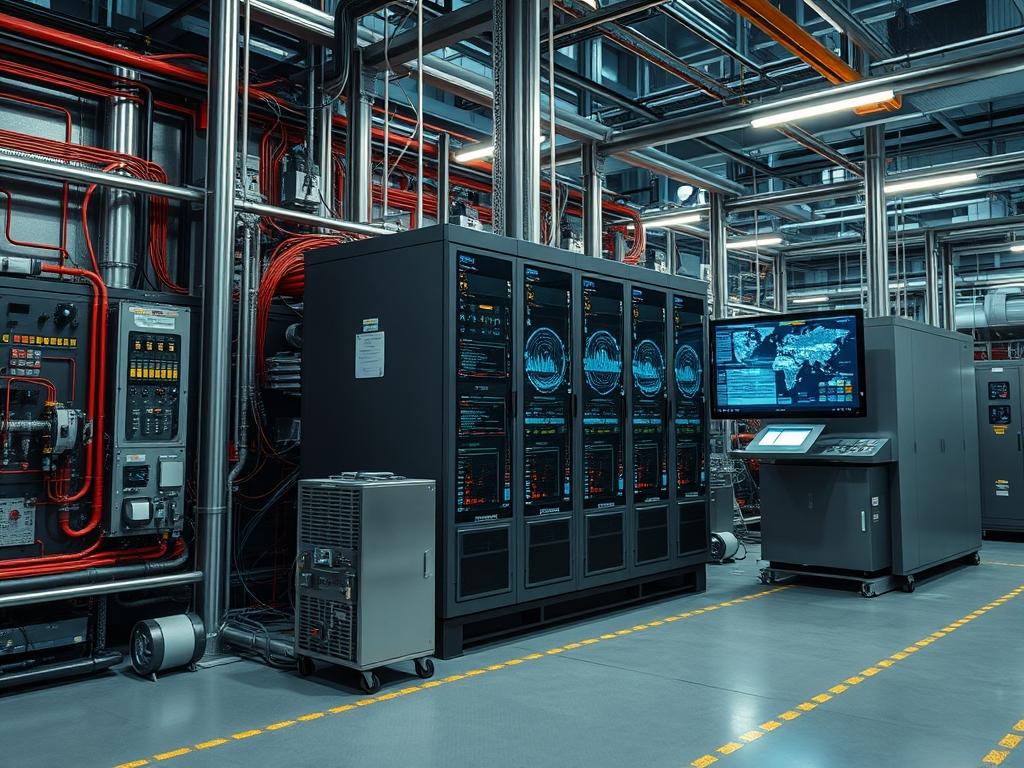
Inverter Load Shifting functions as the primary control logic for optimizing energy consumption within microgrids and industrial power systems. It manages the transition between grid power, solar production, and Battery Energy Storage Systems (BESS) via automated triggers to minimize utility expenditure during peak tariff windows. The system resides at the intersection of the Electrical Balance of Plant (EBoP) and the local area network, often utilizing Modbus TCP or RTU protocols to interface with the power conversion system (PCS). By monitoring State of Charge (SoC) and real-time solar irradiance, the controller dictates when to charge from the grid, when to discharge to the local bus, and when to curtail production. Operational dependencies include high-accuracy current transformers (CTs), low-latency network paths for telemetry, and validated Time-of-Use (ToU) data feeds. A failure in the load shifting logic typically results in significant financial penalties due to peak-hour grid draws or localized thermal overloads from unmanaged discharge rates. Consistent throughput of telemetry is required to prevent control loop oscillation, which can degrade battery chemistry and stress power electronics through rapid switching cycles.
| Parameter | Value |
| :— | :— |
| Communication Protocols | Modbus TCP, Modbus RTU, MQTT, SunSpec |
| Operational Voltage Range | 200V to 1000V DC (System Dependent) |
| Latency Threshold | < 200ms for control loop stability |
| Default TCP Port | 502 (Modbus), 1883 (MQTT), 8883 (MQTTS) |
| Industry Standards | IEEE 1547, UL 1741, IEC 62109 |
| Resource Requirements | 1 vCPU, 512MB RAM (Edge Controller) |
| Environmental Tolerance | -20C to +60C for outdoor enclosures |
| Security Exposure | High (Direct Grid/Load Control) |
| Recommended Hardware | Industrial PC or PLC with RS485 Isolation |
| Concurrency Threshold | 10 simultaneous Modbus client connections |
Environment Prerequisites
Implementation requires a functional BESS and a hybrid or grid-tie inverter supporting external control registers. Software requirements include a Linux-based edge gateway running Python 3.10 or later, or a dedicated Programmable Logic Controller (PLC) with an Ethernet interface. Firmware on the power conversion system must be updated to the latest vendor-validated version to ensure register map consistency. Network infrastructure must provide a static IP for the inverter and the gateway, with firewall rules permitting bidirectional traffic on port 502. If using cloud-based tariff data, the gateway requires outbound HTTPS access to vendor-specific APIs. Physical prerequisites include the installation of Class 1 accuracy energy meters at the main utility feed to provide the feedback loop for zero-export or specific load-shaving targets.
Implementation Logic
The architecture relies on a state-machine model that prioritizes the highest-value energy source. The logic execution occurs in the user-space of the edge controller, polling the inverter for SoC and instantaneous load every 500ms. When the ToU tariff enters a peak window, the controller writes a discharge command to the PCS, forcing the battery to cover the local load up to its rated C-rate. This process is idempotent: the controller repeatedly asserts the desired state rather than sending a single toggle command. This prevents the system from being left in an incorrect state due to dropped packets or local resets. Encapsulation follows the Modbus over TCP standard (RFC 793), where the ADU (Application Data Unit) contains the unit identifier and the PDU (Protocol Data Unit) contains the function code and data. Failure domains are isolated by ensuring the inverter reverts to a safe, grid-following mode if the external controller heartbeats are lost.
Modbus Interface Configuration
The first step is establishing a reliable data link to the inverter. Use mbpoll to verify register accessibility and map the internal variables to the control logic.
“`bash
Verify connection to inverter at 192.168.1.50 on port 502
mbpoll -m tcp -a 1 -r 40001 -c 10 192.168.1.50
“`
This command reads 10 holding registers starting at 40001. You must correlate these addresses with the vendor register map. Identify the registers for “Active Power Limit,” “Battery Charge/Discharge Command,” and “Storage Control Mode.” Accessing these allows the software to override internal inverter logic.
System Note: Always configure a communication timeout on the inverter. If the gateway fails, the inverter must detect the lack of traffic and return to “Default” or “Auto” mode within 60 seconds to prevent deep discharge or grid non-compliance.
Logic Engine Deployment
The control daemon handles the ToU schedule and SoC calculations. Use a stateful service to track the current energy price window and the required battery response.
“`python
import pymodbus.client as ModbusClient
Define register map
STORAGE_MODE_REG = 40082
DISCHARGE_LIMIT_REG = 40090
client = ModbusClient.ModbusTcpClient(‘192.168.1.50’)
client.connect()
Set Inverter to Remotely Controlled Discharge Mode
client.write_register(STORAGE_MODE_REG, 4)
Set Discharge power to 5000W
client.write_register(DISCHARGE_LIMIT_REG, 5000)
“`
The script sets the storage mode to “Manual” and defines the maximum discharge current. This overrides the default solar-priority logic and forces the battery to dump energy into the local bus during peak hours.
System Note: Implement a check against the local energy meter before writing. If the local load is only 2000W and you command a 5000W discharge, the excess 3000W will export to the grid, which may be prohibited under certain interconnection agreements.
Actuator and Relay Integration
For systems with legacy heavy loads like HVAC or industrial pumps that do not offer digital communication, use a dry-contact relay module triggered by the same edge gateway.
“`bash
Set GPIO pin 18 high to trigger load relay
echo “18” > /sys/class/gpio/export
echo “out” > /sys/class/gpio/gpio18/direction
echo “1” > /sys/class/gpio/gpio18/value
“`
The logic follows the price increase: the inverter discharges DC power while the relay connects the heavy load simultaneously. This ensures the high-demand equipment effectively runs on “free” stored energy rather than peak-rate utility power.
System Note: Use an industrial-grade relay with integrated snubber circuits to prevent electromagnetic interference (EMI) from disrupting the Modbus signal during heavy-load switching.
Dependency Fault Lines
Deployment failures often stem from Modbus unit ID mismatches. If the inverter is configured as Unit ID 1 and the software queries Unit ID 255, the connection will time out even if the IP is correct. Signal attenuation on RS485 lines is another common failure point: excessive cable length or lack of 120-ohm termination resistors leads to bit errors. Observable symptoms include CRC errors in journalctl -u energy_daemon or intermittent “Connection Refused” messages.
Packet loss on the local network increases control loop latency, leading to “hunting” where the inverter oscillates between charging and discharging. This is verified by pinging the inverter under load: if round-trip times vary by more than 50ms, the control logic will struggle to stabilize. Thermal bottlenecks in the inverter power stages also cause the system to ignore load shift commands. If the internal heat sink exceeds 80C, the PCS will derate its output regardless of the commanded discharge rate.
Troubleshooting Matrix
| Symptom | Root Cause | Verification Command | Remediation |
| :— | :— | :— | :— |
| Gateway Timeout | Wrong Unit ID or IP | nmap -p 502 192.168.1.50 | Match Unit ID in config to inverter HMI |
| Register Write Failure | Read-only register access | mbpoll -v -m tcp … | Enable “External Control” in inverter menu |
| Inverter Oscillation | High telemetry latency | ping -i 0.2 192.168.1.50 | Move gateway to a local VLAN with QoS |
| Battery SoC Stalled | Thermal derating | tail -n 50 /var/log/syslog | Inspect inverter airflow and ambient temp |
| Logic Desync | NTP drift on controller | timedatectl status | Synchronize gateway to a local Stratum 1 NTP |
Example of a Modbus exception log in journalctl:
`Jun 15 14:10:02 gateway python[452]: Modbus Error: [Exception] Modbus Error: [Invalid Message] No response received, expected 1 bytes, received 0`
This indicates a physical layer disconnection or the inverter refusing the connection after too many concurrent sessions.
Performance Optimization
Tune the polling interval to 250ms for high-frequency load environments to reduce grid leakage. Use a moving average filter on the power readings to prevent spikes from triggering false shifting events. For thermal efficiency, schedule charging during the coolest part of the night to reduce the speed of fans and minimize parasitic auxiliary loads.
Security Hardening
Isolate the energy management system on a dedicated VLAN. Use iptables to restrict port 502 access to only the edge gateway IP. Change all default passwords on the inverter WebUI. For remote monitoring, use an encrypted MQTT bridge over TLS (port 8883) rather than exposing Modbus directly to the internet.
Scaling Strategy
For multi-inverter sites, deploy a lead-lag controller architecture. The lead controller aggregates the SoC across all battery clusters and distributes the discharge load proportionally. This prevents one cluster from reaching its low-voltage cutoff before others, maximizing the available capacity for the entire shift window. Capacity planning should account for a 20% buffer in battery sizing to compensate for lithium-ion degradation over a 10-year service life.
Admin Desk
How do I calculate the ROI of this system?
ROI equals the delta between peak tariff prices and off-peak charging costs, multiplied by the total kWh shifted, minus the round-trip efficiency losses of the BESS (typically 10-15%) and the annualized hardware maintenance costs.
Why does my inverter ignore discharge commands?
Inverters prioritize safety and hardware longevity. If the battery SoC is below the minimum threshold (e.g., 20%) or the cell temperature is outside the 0C to 45C range, the internal BMS will override external discharge commands.
Can I shift loads without a battery?
Yes, using specific “Demand Response” logic. You can trigger relays to deactivate non-essential loads (like water heaters) during peak prices, though the savings are typically lower than systems utilizing a dedicated BESS for active arbitrage.
What happens if the internet goes down?
The system should rely on a local ToU schedule stored on the edge gateway. Only use cloud APIs for periodic updates. Local Modbus and MQTT traffic is unaffected by WAN outages, ensuring deterministic control.
How do I prevent Modbus bus jamming?
Ensure only one master device is polling the bus at a time for RS485 RTU. For TCP, limit the number of concurrent connections and use a gateway that supports request queuing to prevent buffer overflows on the inverter’s NIC.