
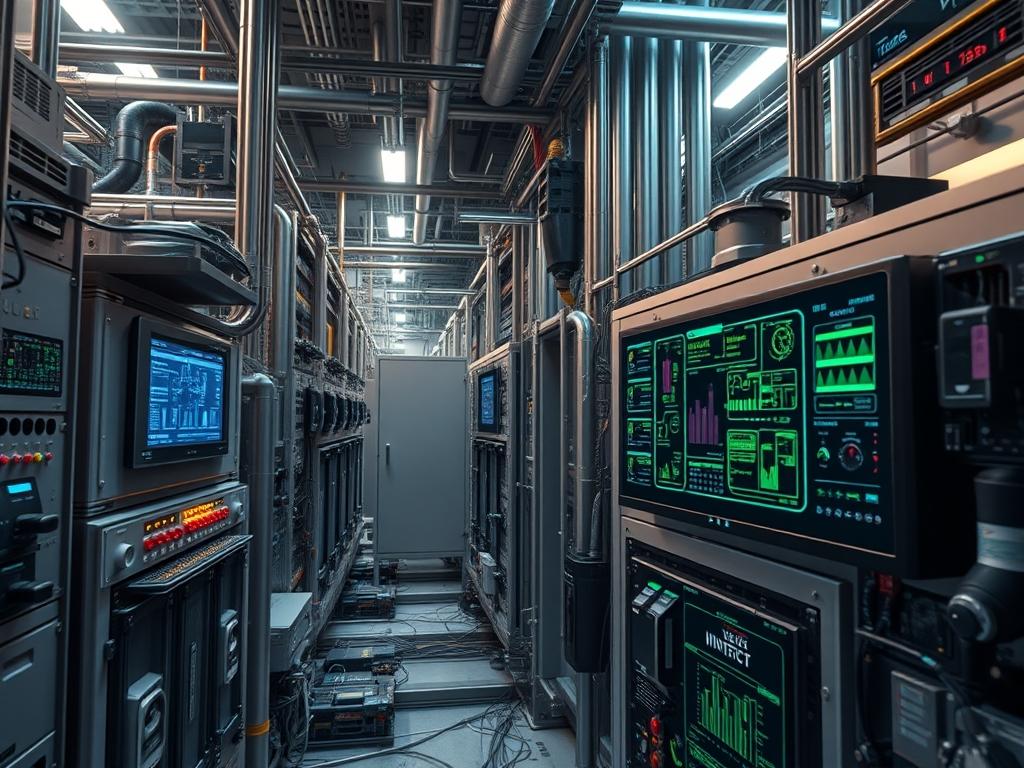
Subpanel loading rules for multi inverter sites dictate the maximum allowable current injection from distributed energy resources into a shared busbar system. This protocol ensures that the thermal capacity of the physical distribution hardware is not exceeded when multiple power sources, such as grid feed and inverter backfeed, operate in parallel. The engineering objective is to prevent localized overheating of the busbar, which occurs when the sum of current from all sources exceeds the rated ampacity of the conductors. In complex infrastructure, these rules are governed by the 120 percent rule, which allows the sum of the overcurrent protection devices (OCPD) to exceed the busbar rating by 20 percent, provided the solar feed is located at the opposite end of the bus from the primary utility feed. Failure to calculate these limits accurately leads to catastrophic failure of the power distribution unit (PDU), insulation degradation, and increased fire risk. Operational dependencies include the precision of current transformers (CTs), the integrity of firmware managed power limits, and the synchronization of inverter output phases with the utility grid. Effective implementation requires moving beyond static hardware limits into dynamic monitoring via Modbus or SNMP to maintain system stability during peak production cycles.
| Parameter | Value |
| :— | :— |
| Standard Compliance | NFPA 70 (NEC 705.12) |
| Busbar Rated Ampacity | 100A to 4000A (Site Specific) |
| Maximum Backfeed Ratio | 1.2x Bus Rating (Standard) |
| Operating Voltage | 208VAC, 240VAC, or 480VAC 3-Phase |
| Operating Frequency | 60Hz (US) / 50Hz (EU) |
| Protocol Support | Modbus TCP/RTU, SunSpec, SNMP v3 |
| Thermal Operating Range | -25C to +60C Enclosure Internal |
| Communication Latency | < 100ms for Rapid Shutdown |
| Recommended Monitoring Hardware | Linux-based Gateway (ARM/x86) |
| Security Level | AES-256 for Remote Telemetry |
Environment Prerequisites
Successful deployment requires verification of the existing electrical service infrastructure. The primary distribution board must have a documented ampacity rating verified by the manufacturer nameplate. High density sites require inverter firmware that supports active power curtailment and reactive power control (Volt-VAR). All monitoring gateways must run a hardened Linux distribution with python3, pymodbus, and chrony for precise time stamping of power events. Access to the physical subpanel requires an arc flash boundary assessment and appropriate personal protective equipment (PPE). Network prerequisites include a dedicated VLAN for industrial control systems (ICS) to isolate inverter traffic from general purpose local area networks.
Implementation Logic
The engineering rationale for subpanel loading centers on current density and heat dissipation. In a standard feed configuration, all current flows from a single source breaker through the busbar to various branch loads. When multiple inverters are added, current is injected at different points along the bus. If inverters are placed randomly, the cumulative current at a specific section of the busbar can exceed its physical rating even if no single breaker trips. The system utilizes the “Opposite End” rule to ensure that the utility current and the solar current flow toward each other, effectively “meeting” at the loads. This logic reduces the maximum current seen at any single point on the busbar. Encapsulation of these rules into the monitoring logic allows the site controller to daemonize a service that polls each inverter for its real time output_current and triggers a load_shed or inverter_derate command if the sum approaches 95 percent of the calculated thermal limit.
Step 1: Busbar Ampacity And Main Breaker Verification
Identify the physical limits of the subpanel. Locate the manufacturer stamp on the interior of the cabinet or the busbar itself. Record the rated ampacity (B) and the rating of the main service disconnect (M). Use a Fluke 376 FC clamp meter to verify the actual real time load before adding inverter circuits. This step ensures the baseline data for the loading equation is grounded in physical hardware reality rather than outdated blueprints.
System Note: Always verify if the busbar is copper or aluminum, as thermal expansion coefficients differ. This affects the torque specifications for the lugs where inverter OCPDs are landed.
Step 2: Calculating Maximum Backfeed Capacity
Apply the 120 percent rule. The formula is: (Busbar Rating 1.2) – Main Breaker Rating = Max Solar OCPD. For a 200A busbar with a 200A main breaker, the calculation is (200 1.2) – 200 = 40A. This means you can install a maximum of 40A of total inverter breakers at the opposite end of the busbar. For sites requiring more capacity, you must derate the main breaker (e.g., swapping a 200A breaker for a 175A breaker) to increase the allowable solar window.
System Note: Modifying the main breaker rating requires a recalculation of the total connected load to ensure the building service can still handle peak demand without nuisance tripping.
Step 3: Configuring Multi Inverter Communication
Connect the inverters to the monitoring gateway via RS-485 or Ethernet. Assign unique Modbus IDs to each unit. Use a configuration tool or a custom script to aggregate the data.
“`bash
Example polling check for a three-inverter array
for id in 1 2 3; do
modpoll -m tcp -a $id -r 40072 -c 1 -t 4:int 192.168.10.50
done
“`
This verifies that the system can see the real time amperage from every source. Internally, the gateway uses these values to ensure the sum of actual current never exceeds the continuous duty rating of the subpanel.
Step 4: Logic Implementation For Active Power Control
Implement a daemonized Python service on the gateway to monitor the total current. If the inverters are capable of dynamic scaling, the script should adjust the WMaxLimPct (Maximum Active Power Percent) register via Modbus.
“`python
Logic snippet for thermal headroom management
import pymodbus
MAX_BUSBAR_PV_LIMIT = 40.0
current_pv_output = get_sum_of_inverters()
if current_pv_output > (MAX_BUSBAR_PV_LIMIT * 0.95):
set_inverter_limit(90) # Reduce to 90% of nameplate
log_event(“THERMAL_LIMIT_WARNING”)
“`
System Note: This software layer acts as a secondary safety net. The primary safety is always the physical OCPD (breaker).
Step 5: Validating Physical Phase Balance
Use a power quality analyzer to ensure the multi inverter system is not causing significant phase imbalance. Inverters should be distributed equally across Phase A, B, and C in 3-phase systems. Check the Neutral-to-Ground voltage to ensure harmonic distortion from the inverters is not saturating the neutral conductor. High neutral current indicates unbalanced inverter loading or excessive non-linear loads.
Dependency Fault Lines
Performance bottlenecks often emerge from signal attenuation in the RS-485 daisy chain if termination resistors (120 ohm) are missing. This leads to packet loss and stale data in the monitoring service, potentially missing a thermal spike. Another common failure is the “Center Fed” busbar conflict; if the main breaker is in the middle of the busbar, the 120 percent rule cannot be applied in the same way, as current can flow in multiple directions simultaneously, creating hotspots. Permission conflicts in the gateway OS, such as the systemd service failing to access /dev/ttyUSB0, can halt the monitoring daemon. Kernel module conflicts, particularly with cheap USB-to-Serial adapters (CH341 vs. FTDI), frequently cause controller desynchronization. Remediation involves switching to industrial grade, isolated converters and locking the device path via udev rules.
Troubleshooting Matrix
| Symptom | Root Cause | Verification Method | Remediation |
| :— | :— | :— | :— |
| Inverter “Grid Overvoltage” | High impedance at subpanel | Measure VAC at inverter lugs vs Service Entrance | Increase conductor size or reduce power limit |
| Modbus Timeout | Signal attenuation / No termination | Check dmesg for serial errors | Install 120 ohm resistor at end of line |
| Unexpected Main Breaker Trip | Harmonics or 120% rule violation | Review syslog and load profile | Re-calculate loading; check phase balance |
| Rapid Shutdown Triggered | Signal interference on RSD loop | Use oscilloscope to check RSD heartbeat | Shield RSD control wires; separate from AC |
| Data Lag in Dashboard | CPU starvation on gateway | Run htop; check I/O wait | Optimize polling frequency; upgrade hardware |
Check logs via:
journalctl -u solar-monitor.service -n 100 –no-pager
Validate Modbus registers:
mbpoll -v -m tcp -a 1 -r 40001 -t 4 192.168.1.100
Performance Optimization
To maximize throughput without upgrading physical busbars, implement a “Zero Export” or “Limited Export” strategy. Using a high speed meter at the main service entrance allows the inverters to produce maximum power for local loads while ensuring the backfeed into the grid stays within the calculated safety window. This reduces thermal inertia buildup in the subpanel during periods of low site consumption. Optimize the polling queue by prioritizing “Active Power” and “Current” registers over “Lifetime Energy” or “Temperature” to reduce latency in the feedback loop.
Security Hardening
Isolate the inverter management network. Use iptables to drop all incoming traffic to the gateway except from authorized engineering workstations.
“`bash
iptables -A INPUT -p tcp –dport 502 -s 10.0.0.5 -j ACCEPT
iptables -A INPUT -p tcp –dport 502 -j DROP
“`
Disable unencrypted protocols like Telnet or HTTP; enforce SSH with public key authentication. Ensure the inverter firmware is updated to mitigate known vulnerabilities in the SunSpec implementation.
Scaling Strategy
For horizontal scaling, treat each subpanel as an independent node. Use a hierarchical monitoring approach where a central site controller aggregates data from multiple subpanel gateways via MQTT. This design allows for massive redundancy; if one subpanel gateway fails, only that section of the array reverts to its default hardware safety state, while the rest of the site continues to operate at optimized levels.
Admin Desk: Frequently Asked Questions
How is the 120 percent rule applied specifically?
The sum of the main breaker and all solar breakers must not exceed 120 percent of the busbar rating. The solar breakers must be installed at the opposite end of the bus from the main supply to prevent localized busbar overloading.
What happens if I cannot meet the 120 percent rule?
You must either derate the main service breaker to create more “room” on the busbar or install a subpanel with a higher ampacity rating. Alternatively, use a “sum of all breakers” calculation if the busbar permits.
Can I mix different inverter brands in one subpanel?
Yes, provided each has its own OCPD and the total backfeed is calculated correctly. Monitoring becomes more complex, requiring a gateway that supports multiple Modbus map profiles to aggregate real time current data across different manufacturer registers.
Why is phase balancing critical in multi inverter sites?
Unbalanced current injection causes voltage rise on a single phase, leading to premature inverter shutdown. It also increases neutral current, which can overheat the neutral busbar, as it is often not protected by an overcurrent device.
What is the best way to monitor thermal stress?
Deploy digital temperature sensors (DS18B20 or similar) directly to the busbar near the point of interconnection. Integrate these sensors into the monitoring gateway to trigger an automated power reduction if temperatures exceed 65 degrees Celsius.