
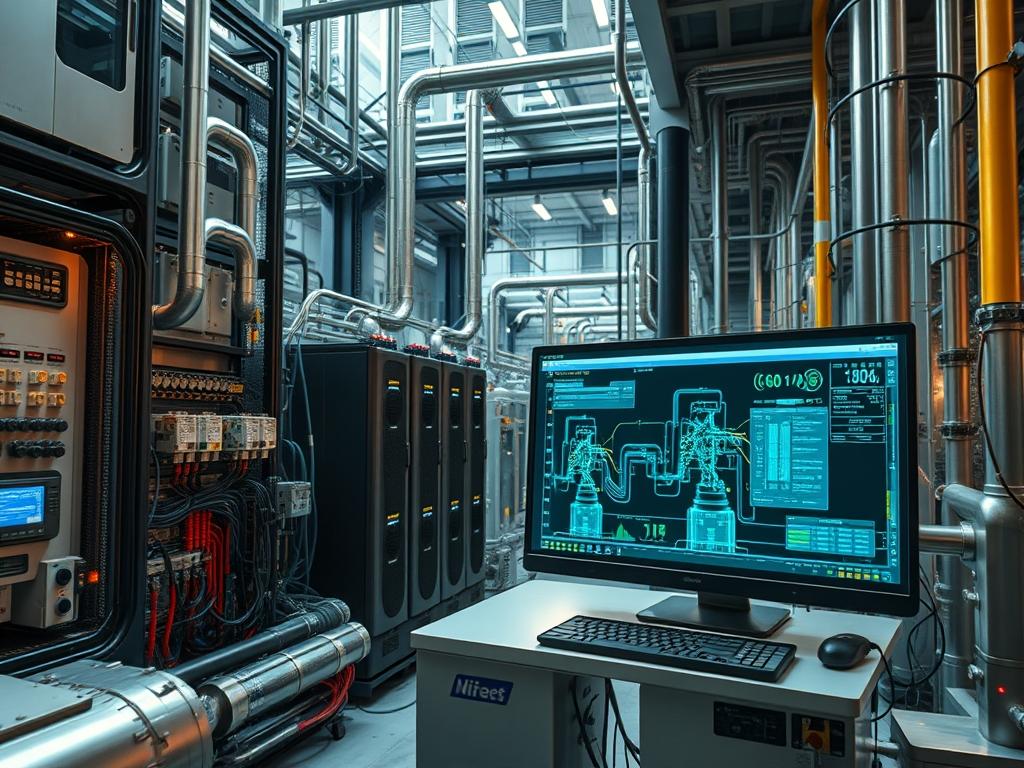
Positive ground systems, primarily utilized in -48V DC telecommunications and industrial cathodic protection environments, utilize the positive terminal as the common reference point connected to the local earth or chassis ground. This architecture effectively mitigates the risk of electrolytic corrosion in subterranean copper conductors by maintaining the transmission medium at a lower potential than the surrounding environment. However, managing Positive Ground System Hazards requires precise engineering controls to prevent catastrophic short circuits when integrating with contemporary negative ground infrastructure. In facilities where both polarities coexist, the primary risk involves common-bus ground loops and inadvertent chassis-to-chassis contact. If a negative ground device is mounted in the same conductive rack as a positive ground unit without electrical isolation, the resulting potential difference induces massive current flow through signal cables and mounting hardware. This hazard extends to the monitoring layer, where non-isolated RS-232 or BNC connectors can serve as unintended return paths, leading to localized thermal runaway and immediate equipment failure. Operational stability depends on the deployment of galvanic isolation barriers, rigorous busbar demarcation, and high-impedance grounding resistors to limit fault currents and maintain signal integrity across the infrastructure.
| Parameter | Value |
| :— | :— |
| Nominal Operating Voltage | -48V DC to -54V DC |
| Grounding Configuration | Positive Pole to Earth (PTE) |
| Isolation Barrier Minimum | 500V DC Dielectric Strength |
| Recommended Monitoring Protocol | SNMP v3 or Modbus TCP |
| Environmental Tolerance | -40C to +65C Operational Range |
| Standard Compliance | ETSI EN 300 132-2 / Telcordia GR-1089-CORE |
| Typical Port Impedance | 75 Ohm or 120 Ohm Balanced |
| Maximum Ripple Voltage | < 100 mV Peak-to-Peak |
| Protective Device Requirement | Dual-pole Circuit Breakers or Fused Isolation |
Configuration Protocol
Environment Prerequisites
Effective management of these systems requires an Isolated Ground Zone (IGZ) established via a Master Ground Bar (MGB). All copper-based networking equipment must support 1500V AC isolation on Ethernet ports per IEEE 802.3 standards. Technicians must utilize 1000V-rated insulated tools (Category III or IV) and verify that all DC-to-DC converters are galvanically isolated, meaning the input return and output return share no common internal trace. Deployment manifests must specify the use of dual-hole compression lugs to ensure vibration-resistant connectivity to the grounding bus. Furthermore, any monitoring PC or controller connected to the DC plant through a serial interface must utilize an optical isolator to prevent the positive rail from entering the logic board of the host system.
Implementation Logic
The engineering rationale for positive ground infrastructure centers on the electrochemical protection of metallic interfaces. By pinning the positive rail to the earth, the system ensures that any leakage current flows toward the conductor rather than away from it, which inhibits the oxidation of copper in high-humidity or submerged environments. The configuration logic dictates that all overcurrent protection must be placed on the negative rail (the “hot” lead), as the positive rail is at ground potential. This creates a specific failure domain: if a negative lead contacts the rack frame, a high-current fault occurs immediately. To manage this, the circuit design employs a “Star Ground” topology where every chassis connects to a central Halo Ground ring, ensuring no differential potential exists between adjacent equipment racks. Load handling is managed by modular rectifiers that share current based on a 0V to 10V analog signal or a digital CAN bus, allowing for N+1 redundancy without introducing ground-loop interference.
Step By Step Execution
Initial Ground Potential Verification
Before energizing any legacy equipment, use a Fluke 289 multimeter to measure the potential difference between the rack frame and the master ground bar. The reading must be less than 0.5V AC and 0.2V DC. If a higher voltage is detected, inspect the bond jumpers for high impedance or oxidation.
System Note: High resistance at the ground bond leads to “floating” chassis scenarios where the frame can sit at -48V relative to the floor, posing a lethal threat to personnel.
Isolated DC-DC Converter Installation
Mount the isolated DC-DC converter using nylon washers or specialized isolator bushings if the converter chassis is common to the output negative. Connect the input positive lead to the positive busbar and the input negative lead to the negative busbar. Configure the output side to provide the 12V or 24V required by the peripheral equipment.
“`bash
Verify the isolation of the converter using an insulation tester at 250V
Target: > 100 Megaohms between input and output terminals
“`
System Note: Many “bucket” converters sold for automotive use are non-isolated and will explode if connected to a -48V positive ground system while the load is also grounded.
SNMP Monitoring Agent Configuration
Configure the power plant controller to report ground fault alarms via SNMP. Access the configuration interface and define the threshold for leakage current, typically set at 50mA for large-scale busbars.
“`bash
Example snmpset command to configure a ground fault threshold on a PDU
snmpset -v3 -u admin -l authPriv -a SHA -A auth_pass -x AES -X priv_pass \
192.168.1.50 1.3.6.1.4.1.2835.1.1.5.2.1.0 i 50
“`
System Note: Use snmpwalk to verify that the OID for ground integrity returns a “normal” status after the initial grounding bond is completed.
Rectifier Load Balancing Setup
Log into the rectifier control module via SSH and set the load-sharing protocol to active current sharing. This ensures that no single rectifier assumes the entire load, which reduces thermal stress and prevents “hot spots” on the positive return bus.
“`bash
Access the rectifier control daemon
systemctl restart rectifier-balance-service
Check current distribution logs
tail -f /var/log/power-plant/load-share.log
“`
System Note: Unbalanced rectifiers can cause localized heating at the busbar connection points, leading to increased resistance and eventual fire hazards.
Dependency Fault Lines
Common operational failures in positive ground environments often stem from Ground Loop Interference. This occurs when two different grounding points are used for the same data link, such as an RS-422 cable connecting a -48V controller to a 110V AC powered server. The root cause is a potential difference between the disparate ground references. Observable symptoms include high bit-error rates, intermittent link flapping, or physical charring of the DB9 connectors. Verification involves checking the voltage between the cable shield and the chassis using a voltmeter. Remediation requires the installation of an RS-422 optical isolator.
Signal Attenuation is another frequent issue, specifically in legacy copper loops where moisture has compromised the insulation. In a positive ground system, this manifests as a gradual increase in the noise floor. The root cause is marginal insulation breakdown causing a micro-short to the grounded positive rail. Verification is performed using a Time Domain Reflectometer (TDR) to identify the distance to the fault. Remediation involves replacing the section of cable or increasing the gas pressure in the cable sheath to drive out moisture.
Thermal Bottlenecks often occur at the “return” busbar connections. Because the positive side is grounded, technicians occasionally neglect the torque requirements, assuming it is “just a ground.” Root cause is loose mechanical coupling leading to high contact resistance. Observable symptoms include localized discoloration of the busbar or thermal alarms from sensors. Verification requires an infrared thermography scan while the system is under peak load. Remediation involves retorquing all bolts to the manufacturer-specified foot-pounds and applying an anti-oxidant joint compound.
Troubleshooting Matrix
| Symptom | Fault Code | Log Verification | Diagnostic Tool |
| :— | :— | :— | :— |
| Potential to Earth > 2V | ALM-GND-01 | journalctl -u powerd | Fluke 87V |
| High Bit Error Rate | ERR-SIG-404 | cat /proc/net/dev | Digital Oscilloscope |
| Rectifier OverTemp | ALM-THM-09 | /var/log/syslog | IR Thermographic Camera |
| DC Bus Ripple | ALM-PWR-05 | snmptrapd logs | Power Quality Analyzer |
| Communication Timeout | ERR-MOD-12 | modbus-cli output | Protocol Analyzer |
Example log analysis:
If journalctl shows “Negative Rail Leakage Detected: 120mA,” this indicates a breakdown in the insulation of a feeder cable or a failing component within a connected load. Immediately isolate secondary branches to locate the fault.
“`text
Mar 15 10:12:34 pdu-node1 powerd[442]: WARN: Ground current exceed threshold
Mar 15 10:12:35 pdu-node1 snmptrapd[510]: Trap: DISMAN-EVENT-MIB::mteTriggerFired
“`
Optimization And Hardening
Performance Optimization
To maximize throughput in high-current DC plants, focus on reducing the circuit impedance of the negative rail. Use larger gauge 4/0 AWG cabling for any run exceeding 50 feet to combat voltage drop. Optimization of the PID controller settings within the rectifier software reduces the recovery time during a transient load event. Tuning the “Current Walk-In” parameter prevents the DC plant from overwhelming the backup generators during a transition from battery power to utility power.
Security Hardening
Hardening involves isolating the control plane from the data plane. Use iptables to restrict access to the rectifier management interface, allowing only the designated monitoring server IP.
“`bash
iptables -A INPUT -p tcp -s 10.0.5.20 –dport 80 -j ACCEPT
iptables -A INPUT -p tcp –dport 80 -j DROP
“`
Ensure that any MQTT or SNMP traffic for power monitoring is encapsulated within an IPsec or SSH tunnel to prevent unauthorized manual adjustment of the output voltage, which could be used to induce hardware damage via overvoltage.
Scaling Strategy
For horizontal scaling, implement a modular power shelf design where additional 2kW rectifier modules can be hot-swapped into the system. High availability is achieved by using a “Dual-Feed” or “A+B” power architecture, where each rack-mounted device receives a -48V feed from two independent battery plants. Capacity planning should account for a 20 percent overhead to prevent the rectifiers from operating at their thermal limit, which drastically increases the Mean Time Between Failures (MTBF).
Admin Desk
How do I safely test a positive ground busbar?
Always use the “one hand rule” and 1000V rated probes. Measure from the negative rail to the positive busbar to confirm nominal voltage, then from the positive busbar to a known earth ground to confirm 0V potential.
Why is my isolated converter getting hot?
Check for common-mode noise on the input side using an oscilloscope. If the isolation transformer is saturating due to high-frequency ripple from the primary rectifiers, efficiency drops and thermal output increases. Ensure proper input filtering is installed.
Can I mix -48V and +24V in one rack?
Only if all +24V equipment is fully floating or utilizes an isolated DC-DC converter. The chassis grounds must be bonded to the same MGB, but the electrical returns must never touch. Label all busbars clearly to avoid technician error.
What is the most common cause of “Ghost” alarms?
Ground loops in the monitoring cabling. If the SNMP gateway is grounded at the NOC and the power plant is grounded at the site, a potential difference creates stray current on the RS-485 or Ethernet shield, triggering false sensor readings.
How do I remediate electrolytic corrosion?
Verify that the positive rail is the one grounded. If the system was accidentally wired as negative ground, reverse the connections at the MGB. Clean affected terminals with a wire brush and apply a thick layer of conductive NO-OX-ID compound.