
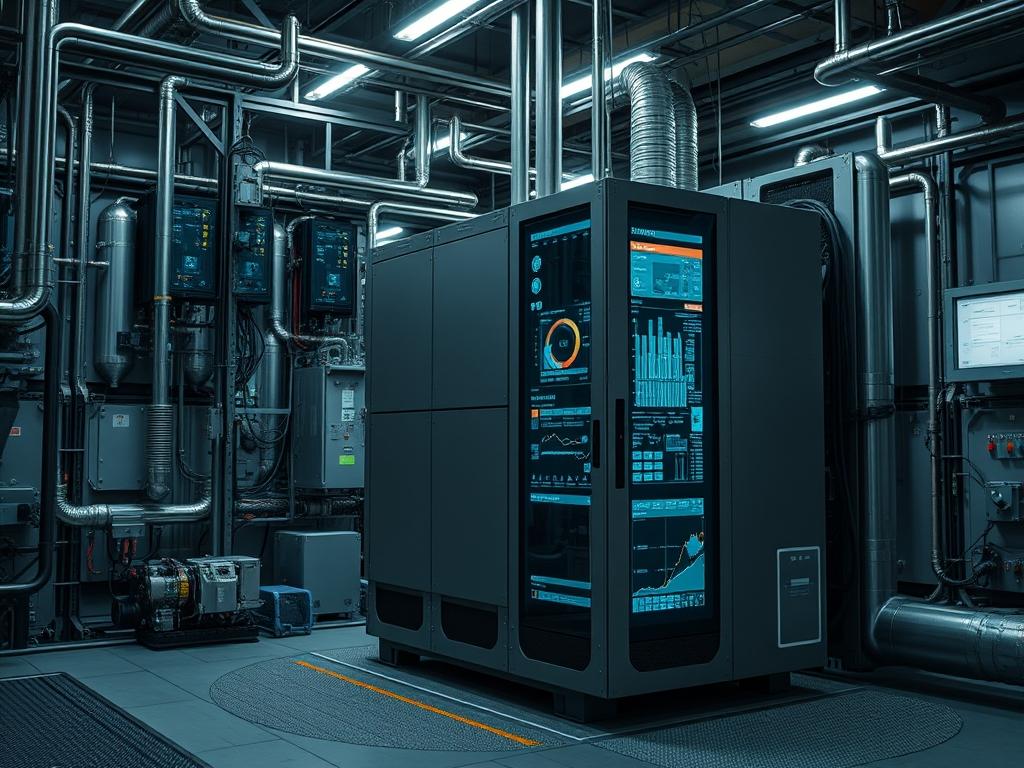
Inverter Battery Charging systems function as the primary power rectification and regulation interface between an alternating current source, such as a utility grid or generator, and a direct current electrochemical storage array. The operational objective involves converting AC into regulated DC to restore battery capacity while adhering to specific voltage and current curves defined by the battery chemistry. In high availability infrastructure, such as edge data centers or telecommunications base stations, the charging subsystem is a critical integration layer that sits between the power distribution unit and the energy storage system. Effective programming of charge rates and voltages mitigates the risk of thermal runaway, plate sulfation in lead acid variants, and lithium plating in ion based chemistries. Operational dependencies include real time feedback from the Battery Management System, temperature sensor accuracy, and the stability of the input AC frequency. Failure to maintain these parameters leads to accelerated degradation of the storage medium; this causes reduced backup autonomy and increases the probability of catastrophic failure during a grid outage. The charging logic must manage thermal inertia within the battery enclosure to prevent electrolyte outgassing or internal pressure buildup.
| Parameter | Value |
|———–|——-|
| Bulk Charge Voltage (VDC) | 14.4 to 14.8 (12V Nominal AGM) |
| Absorption Voltage (VDC) | 14.2 to 14.6 (12V Nominal Gel) |
| Float Voltage (VDC) | 13.5 to 13.8 (12V Nominal) |
| Equalization Voltage (VDC) | 15.0 to 15.5 (Flooded Lead Acid Only) |
| Maximum Charge Rate (C-Rate) | 0.1C to 0.3C (Lead Acid); 0.5C to 1.0C (LFP) |
| Communication Protocols | Modbus-RTU, Modbus-TCP, CAN bus, SNMP v3 |
| Temperature Compensation | -3mV to -5mV per Cell per degree Celsius |
| Operating Temperature Range | -20 to 50 degrees Celsius |
| Default Management Port | TCP 502 (Modbus), TCP 161/162 (SNMP) |
| Harmonic Distortion (THDi) | less than 5 percent |
| Isolation Voltage | 2kV AC Input to Output |
Environment Prerequisites
Successful deployment requires a functional RS485 or CAN bus physical layer for communication between the inverter controller and the battery strings. The hardware must be running firmware that supports programmable three stage charging profiles; version 2.4.x or higher is typically required for advanced lithium-iron phosphate (LiFePO4) support. Engineers must ensure the BMS has administrative permissions to overrule the inverter charging state via dry contact or digital communication. Physical prerequisites include 4/0 AWG cabling for high amperage DC paths and calibrated NTC thermistors attached to the negative terminal of the warmest battery in the bank.
Implementation Logic
The engineering rationale for programmable charge rates centers on the transition between Constant Current (CC) and Constant Voltage (CV) modes. The inverter initially delivers a maximum programmed current until the battery bank reaches the bulk voltage setpoint. At this junction, the controller transitions to the absorption phase, where voltage is held constant while current tapers off as internal resistance increases. This logic prevents the over-polarization of the electrodes. The dependency chain relies on accurate current sensing via internal shunts. If the shunt data is inaccurate, the inverter may prematurely exit the absorption phase, leading to chronic undercharging. Encapsulation of these commands usually occurs via Modbus register writes to the inverter control logic, which then modulates the Pulse Width Modulation (PWM) duty cycle of the internal IGBTs or MOSFETs.
Define Bulk and Absorption Voltage Setpoints
Access the inverter controller via the CLI or a web interface to define the primary charging thresholds. If using a Modbus-TCP gateway, identify the registers for Bulk Voltage and Absorption Voltage. For a 48V nominal LiFePO4 system, the bulk voltage is typically set to 56.4V. Verify the settings using a Fluke multimeter at the inverter DC output terminals to ensure the internal voltmeter calibration is correct.
“`bash
Example Modbus write to set Bulk Voltage (Register 40001) to 56.4V
Assuming 100mV per unit resolution
mbpoll -m tcp -a 1 -r 40001 -t 4:int 564 192.168.1.50
“`
System Note: Modifying these registers directly impacts the DC bus voltage; ensure no sensitive DC loads are connected that cannot handle the transient voltage rise during the absorption phase.
Configure Maximum Charge Current Limits
The maximum charge current must be throttled to match the C-rate of the battery bank to prevent internal overheating. Calculate the total Amp-hour (Ah) capacity and multiply by the manufacturer recommended C-rate. For a 400Ah bank at 0.2C, set the limit to 80A. This limit is enforced by the inverter firmware to prevent the AC source from overloading the battery chemistry.
“`bash
Set Maximum Charge Current (Register 40005) to 80A
mbpoll -m tcp -a 1 -r 40005 -t 4:int 80 192.168.1.50
“`
System Note: In multi-inverter parallel configurations, the charge current limit must be synchronized across all units to prevent a single unit from carrying the entire charging load, which can trigger over-current protection in the BMS.
Calibrate Temperature Compensation Slopes
Lead acid batteries require active voltage adjustment based on ambient temperature. Program the temperature compensation coefficient into the inverter logic. Typically, this is -30mV per degree Celsius for a 24V system. This ensures that in cold environments, the voltage is high enough to overcome internal resistance, while in hot environments, the voltage is lowered to prevent outgassing.
“`bash
Example setting for temperature compensation coefficient
Path: /etc/inverter/config.json (for Linux based controllers)
{
“temp_comp”: -0.005,
“sensor_id”: “ext_ntc_1”,
“unit”: “V/C/cell”
}
“`
System Note: For LiFePO4 batteries, temperature compensation should be disabled (set to 0); lithium chemistries have high charge efficiency across a narrow range and rely on the BMS to disconnect the charger if temperatures fall below 0 degrees Celsius.
Dependency Fault Lines
One common deployment failure is the BMS lockout caused by a permission conflict between the inverter and the battery management logic. If the inverter attempts to push 58V but the BMS has a hard limit of 57.6V, the BMS will open its internal contactors, causing a sudden loss of load and potential inductive spikes. Another fault line is signal attenuation on the RS485 bus. Without proper 120 ohm termination resistors at each end of the chain, reflected signals cause packet loss, leading the inverter to default to a low current limp mode. Thermal bottlenecks also occur when inverters are installed in enclosures with inadequate airflow; the charging FETs will thermally throttle, reducing the effective charge rate regardless of the programmed parameters. Controller desynchronization in parallel setups can cause one inverter to enter float mode while another remains in bulk, creating circulating currents that trigger ground fault alarms.
Troubleshooting Matrix
When diagnosing charging anomalies, analyze the internal logs and sensor readouts to isolate the fault domain.
| Error Code | Symptom | Verification Method | Remediation |
|————|———|———————|————-|
| E01 / ALM | Charging Disconnected | Inspect BMS status over CAN bus | Reset BMS or match inverter voltage to BMS limits |
| E04 | Over Temperature | Check NTC resistance with multimeter | Improve ventilation or clean inverter heat sinks |
| W02 | Current Limit Reached | Run netstat to check Modbus traffic | Verify if AC source power limit is constraining DC output |
| F12 | DC Overvoltage | Check journalctl -u inverter-daemon | Recalibrate voltage sensing or check for external DC sources |
| COMM_LOST | Zero Amp Output | ping inverter management IP | Check RS485 wiring and termination resistors |
Log verification example:
“`text
Apr 14 22:10:05 inv-ctrl-01 inverter-daemon[892]: WARNING: Battery Temp 48C exceeds threshold 45C
Apr 14 22:10:05 inv-ctrl-01 inverter-daemon[892]: ACTION: Reducing charge current to 20A
Apr 14 22:12:10 inv-ctrl-01 bms-comm[910]: High Cell Voltage Alert reported by String 2
“`
Performance Optimization
To maximize throughput, the tail current setting for the transition from absorption to float must be tuned. Setting the tail current too high results in undercharged batteries, whereas setting it too low extends the time batteries remain at high voltage, increasing stress. Use a PID controller logic for current regulation to minimize ripples. Thermal efficiency can be improved by scheduling bulk charging during cooler ambient periods (e.g., night hours) if the infrastructure allows for time of use shifting.
Security Hardening
The management interface for the inverter must be isolated within a dedicated management VLAN. Disable cleartext protocols like Telnet and HTTP, favoring SSH and HTTPS. Use iptables to restrict access to the Modbus-TCP port (502) only from the authorized monitoring server IP address. Implement SNMP v3 with AES encryption for monitoring state of charge (SoC) and battery health.
“`bash
Example iptables rule to secure Modbus port
iptables -A INPUT -p tcp -s 10.0.5.10 –dport 502 -j ACCEPT
iptables -A INPUT -p tcp –dport 502 -j DROP
“`
Scaling Strategy
For horizontal scaling, use a master slave architecture where a single controller calculates the total charging requirement and distributes current targets to multiple parallel inverters. This prevents hunting behavior where inverters fight for voltage control. Design the system for N+1 redundancy; the total required charge current should be achievable even if the largest inverter in the array fails.
Admin Desk
How do I verify the actual charge current if the inverter display is suspected of being inaccurate?
Use a DC clamp meter to measure the current on the positive battery cable. Compare this value against the SNMP OID for output current. If they differ by more than 2 percent, recalibrate the inverter internal shunt via the service menu.
What causes a battery bank to never reach the absorption phase?
This typically occurs if the charge current is lower than the self discharge or constant DC load of the site. Verify that the AC input limit is not set too low and that the bank capacity does not exceed the inverter maximum output.
Can I charge different battery chemistries with the same inverter?
Only if the inverter supports independent profile programming. Never parallel different chemistries on a single DC bus, as their charge curves and nominal voltages are incompatible; this leads to one string being overcharged while the other remains depleted.
How do I handle a BMS communication failure?
Configure the inverter to default to a “Safe Mode” or “User Defined” profile with conservative voltage limits (e.g., 54V for a 48V LFP system). This prevents the system from shutting down while protecting the cells from uncontrolled charging.
Why is the inverter reporting a target voltage higher than the bulk setpoint?
In lead acid configurations, the temperature compensation logic might be increasing the target voltage because the ambient temperature is low. Check the NTC sensor readings to ensure the inverter is not reacting to a faulty or disconnected probe.