
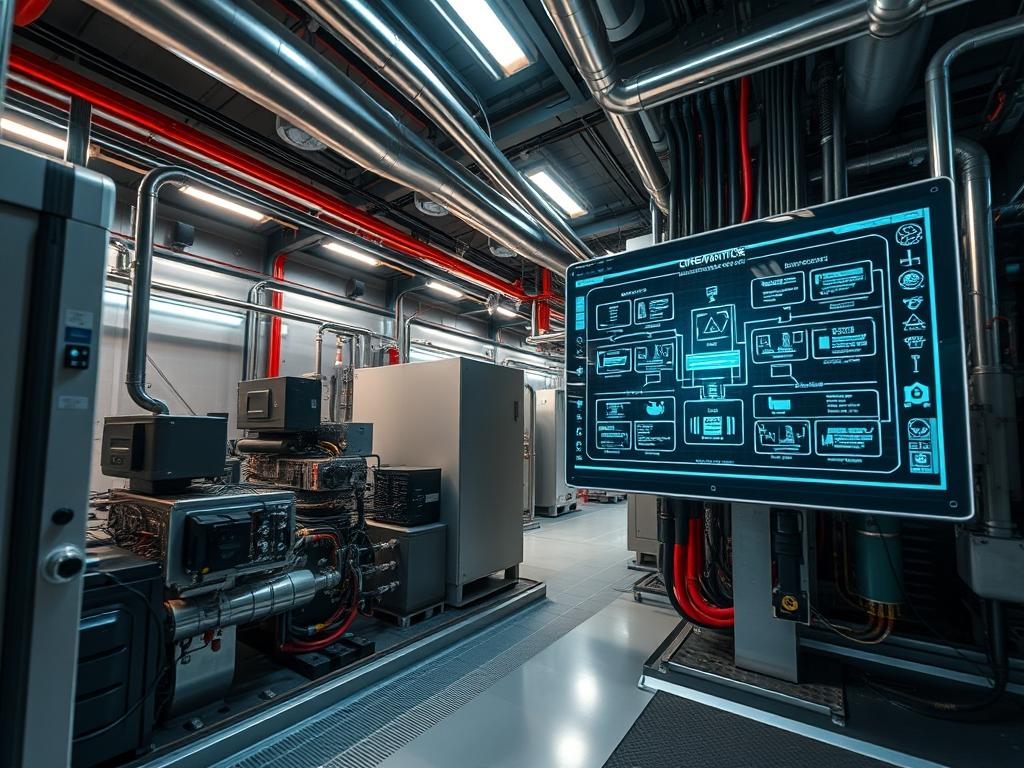
Transformerless Inverter Design represents a critical evolution in power electronics and energy infrastructure; it moves away from the heavy, copper-intensive galvanic isolation of traditional systems toward a streamlined, solid-state architecture. In the context of modern renewable energy and cloud-based power distribution, the traditional transformer acts as a massive bottleneck; it introduces significant magnetic overhead and high thermal-inertia that limits the overall responsiveness of the system. By eliminating the heavy iron core, a Transformerless Inverter Design minimizes signal-attenuation and maximizes the throughput of energy from the source to the load.
This architectural shift addresses the “Efficiency-Weight Gap” encountered in large-scale solar arrays and data center UPS systems. In traditional designs, the transformer provides a physical barrier between DC and AC circuits, but it also creates parasitic losses and increases installation latency due to the sheer physical footprint. The modern solution utilizes sophisticated H-bridge topologies (such as H5, H6, or HERIC) and high-speed MOSFET or IGBT switching to maintain safety and grid synchronization. This manual provides the technical framework for auditing and implementing these high-efficiency units within mission-critical utility or network environments.
Technical Specifications
| Requirement | Default Port/Operating Range | Protocol/Standard | Impact Level (1-10) | Recommended Resources |
| :— | :— | :— | :— | :— |
| DC Input Voltage | 600V – 1500V DC | IEC 61730 / NEC 690 | 10 | SiC MOSFET / 10AWG Wire |
| Switching Frequency | 16 kHz – 32 kHz | PWM (Pulse Width Mod) | 8 | 32-bit DSP / ARM Core |
| Efficiency (Peak) | 98.5% – 99.2% | Euro / CEC Efficiency | 9 | Low RDS(on) Switches |
| Comms Interface | Port 502 (Modbus/TCP) | SunSpec / IEEE 2030.5 | 7 | 512MB RAM / Linux kernel |
| Grounding Guard | < 300 mA (Leakage) | IEC 62109-2 / RCMU | 10 | Logic-Controller / Sensors |
| Thermal Operating | -25C to +60C | NEMA 4X / IP65 | 6 | Active Convection/Heatsink |
THE CONFIGURATION PROTOCOL
Environment Prerequisites:
1. Compliance Standards: Integration requires strict adherence to IEEE 1547-2018 for grid interconnection and NEC 2020 Article 690 for solar PV systems.
2. Physical Hardware: Ensure the presence of a Residual Current Monitoring Unit (RCMU); this is non-negotiable in transformerless systems to mitigate common-mode leakage.
3. Firmware Version: Firmware_v4.2.1 or higher is required to support advanced grid-forming functions and fast-frequency response.
4. User Permissions: Root-level access to the Embedded_Management_Interface or a dedicated Engineering_Login for setpoint manipulation.
5. Network Infrastructure: Shielded twisted-pair (STP) for RS485 or Cat6e for Ethernet, ensuring minimal packet-loss in high-EMI environments.
Section A: Implementation Logic:
The engineering logic behind Transformerless Inverter Design centers on the elimination of magnetic flux conversion. In a standard inverter, the transformer steps up voltage and isolates the DC side through electromagnetic induction. In a transformerless setup, we utilize an electronic “virtual ground” and high-frequency switching to achieve the same voltage envelope. This reduces the mechanical payload of the unit by up to 50%; it also drastically lowers the thermal-inertia of the system, allowing for near-instantaneous adjustments to grid fluctuations. From an audit perspective, the lack of galvanic isolation means that the “separation” is now handled via code and high-speed sensing; the system must be idempotent, ensuring that every command resulting in a switch-state change produces the exact same protective outcome regardless of how many times it is executed.
Step-By-Step Execution
Step 1: DC Bus Pre-Charge and Verification
Before applying full power, initialize the PRE_CHARGE_RELAY to gradually charge the INTERNAL_CAPACITOR_BANK. Use a FLUKE_1587_INSULATION_TESTER to verify that the PV string isolation resistance is above 1.0 M-Ohm.
System Note: This action prevents high inrush current that could damage the IGBT_MODULES. The system kernel monitors the DC_BUS_VOLTAGE_VAR; if the rise-time exceeds the defined threshold, the software triggers an immediate SHUTDOWN_INTERRUPT.
Step 2: RCMU Calibration and Zeroing
Execute the SENSORS_CALIBRATE_LEAKAGE command via the local terminal. This zeros out the RESIDUAL_CURRENT_MONITOR to account for the parasitic capacitance of the specific cable run.
System Note: In a transformerless design, the common-mode voltage can cause “leakage” currents to flow through the PV modules to the ground. This calibration ensures the LOGIC_CONTROLLER can distinguish between normal capacitive leakage and a dangerous ground fault.
Step 3: PWM Gate Driver Alignment
Open the PWM_CONFIG_FILE located at /etc/inverter/switching_logic.conf. Verify that the SWITCHING_FREQUENCY_VAL is set to 20kHz and that the DEAD_TIME_OFFSET is configured to 2 microseconds.
System Note: The dead-time ensures that the high-side and low-side switches in the H-bridge never conduct simultaneously. Improper alignment here leads to a “shoot-through” condition, which would physically compromise the SILIICON_CARBIDE_WAFER inside the power stack.
Step 4: Grid Synchronization and Handshake
Initiate the command systemctl start grid_sync_service. The inverter will begin monitoring the AC_GRID_PHASE_ANGLE using a Phase-Locked Loop (PLL) algorithm.
System Note: The inverter waits for 60 seconds of stable grid conditions (voltage and frequency within IEEE_1547_ENVELOPE) before closing the AC_OUTPUT_CONTACTOR. This step minimizes throughput distortion and ensures the delivery of high-quality power with low Total Harmonic Distortion (THD).
Section B: Dependency Fault-Lines:
The most significant bottleneck in transformerless implementation is the capacitive coupling between the PV array and the earth. Without a transformer, this path is “electrically live” during conversion. High-impedance grounding or degraded module frames can lead to an accumulation of potential that causes PID (Potential Induced Degradation). Furthermore, network latency in the MODBUS_GATEWAY can lead to “stale” data in the monitoring dashboard; if the polling interval is too high, the system may miss transient spikes. Ensure the CONCURRENCY_LIMIT on the data bus is tuned to handle multiple strings without causing packet-loss.
THE TROUBLESHOOTING MATRIX
Section C: Logs & Debugging:
When a fault occurs, the primary diagnostic path is /var/log/inverter/power_sys.log. Look for specific error strings that indicate physical or logic failures.
- Error Code F01 (Low_Iso_Resistance): This indicates the DC_SIDE_MONITOR detected a path to ground. Check all MC4_CONNECTORS for water ingress. Use a multimeter to verify the voltage from PV+ to GROUND and PV- to GROUND.
- Error Code F13 (High_Leakage_Current): This occurs when the RCMU detects a delta greater than 300mA. Investigation should focus on the AC filter capacitors or internal EMI_FILTERS.
- Error Code F64 (Grid_Freq_Out_Of_Range): Check the AC_TERMINAL_BLOCK for loose connections that might increase impedance and cause voltage-frequency jitter.
Audit tools like the LOGIC_ANALYZER should be used to probe the GATE_DRIVE_SIGNALS if the unit fails to transition from “Standby” to “Running.” Verify that the PAYLOAD data in the communication packets is correctly encapsulated; malformed packets can cause the COMMS_BUFFER to overflow, leading to a localized denial-of-service on the monitoring port.
OPTIMIZATION & HARDENING
Performance Tuning:
To maximize throughput, adjust the MPPT_SCAN_INTERVAL based on local weather conditions. In environments with rapid cloud movement, a faster scan rate (low latency) keeps the inverter at the peak of the IV curve. Further, optimize thermal efficiency by adjusting the FAN_SPEED_THRESHOLD in the THERMAL_MANAGEMENT_DAEMON. Lowering the thermal-inertia of the heat sink ensures the POWER_MODULE stays within its optimal efficiency band, typically below 75 degrees Celsius.
Security Hardening:
Transformerless inverters are increasingly networked. Disable all unnecessary services: SSH should be restricted to a specific ADMIN_IP via IPTables. The MODBUS_INTERFACE should be protected behind a hardware firewall to prevents unauthorized setpoint changes, such as modifying the MAX_OUTPUT_POWER variable. Ensure that the PHYSICAL_LOCKOUT_TAGOUT points are clearly identified for both the DC_DISCONNECT and AC_BREAKER to prevent accidental energization during maintenance.
Scaling Logic:
When scaling a site to multiple units, utilize a “Leader-Follower” architecture. The leader unit manages the CONCURRENCY of reactive power (VAR) support across the bus. To reduce signal-attenuation over long distances, use fiber-optic to RS485 converters for the data backbone. This configuration maintains high throughput even as the physical distance between the modules and the Central Control Desk increases.
THE ADMIN DESK
1. How do I fix a persistent “Isolation Fault”?
Ensure all DC cabling is dry. Run the TEST_ISOLATION_ROUTINE command. If the fault persists, use a megohmmeter to check each string individually; the transformerless design is highly sensitive to even minor moisture in the DC_JUNCTION_BOX.
2. Why is the unit derating during peak sunlight?
Check the HEATSINK_TEMPERATURE variable. If it exceeds 70C, the inverter throttles its PAYLOAD to prevent hardware failure. Clean the cooling fins and verify that the AIR_INTAKE_FILTER is not obstructed by debris.
3. Can I use this inverter with ungrounded PV arrays?
Yes; transformerless designs are built for “floating” DC arrays. However, the NEC_690_GROUNDING requirements still mandate that all metal frames be bonded to the Equipment Grounding Conductor (EGC) to prevent shock hazards.
4. What causes Modbus “Timeout Errors” in the logs?
This is typically due to BUS_CONTENTION or improper termination. Verify that a 120-Ohm resistor is installed at the end of the RS485_DAISY_CHAIN. Check for PACKET_LOSS caused by routing cables too close to high-voltage AC lines.
5. Is the “Virtual Ground” safe for maintenance?
No; never assume a transformerless system is safe because it is “Off.” Capacitors can hold a charge for up to 10 minutes. Always verify ZERO_VOLTAGE at the DC_INPUT_TERMINALS before touching any internal component or switchgear.