
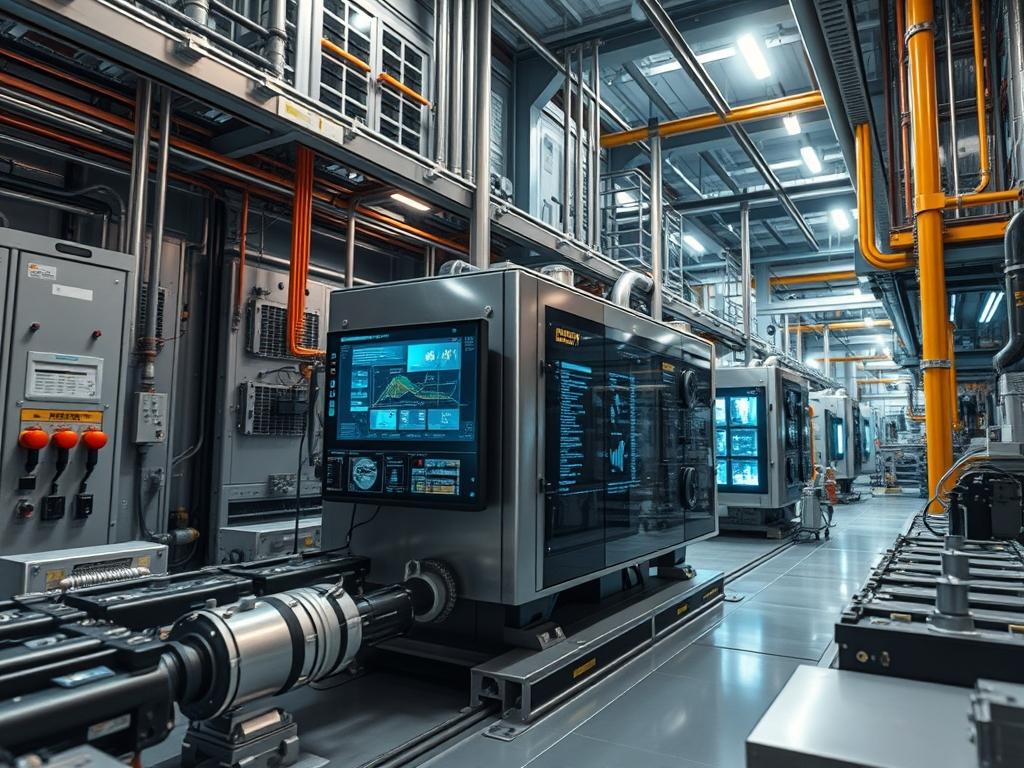
Float charge maintenance represents the steady-state equilibrium phase in lead-acid and lithium-based energy storage systems, specifically engineered to counteract internal self-discharge while preventing accelerated grid corrosion. In critical infrastructure environments such as Tier III data centers or telecommunications headends, the float stage ensures that Valve Regulated Lead Acid (VRLA) or Lithium Iron Phosphate (LiFePO4) strings remain at 100 percent State of Charge (SoC). This is achieved by applying a constant voltage that precisely balances the electrochemical potential of the cell plates against the electrolyte. Failure to maintain precise float voltages results in either sulfation from undercharging or thermal runaway from overcharging. Within a distributed power architecture, float charge maintenance is managed by the Rectifier Control Unit (RCU) or a Battery Management System (BMS) over industrial buses. These controllers must account for thermal inertia and voltage drop across busbars to ensure that the actual potential at the battery terminals matches the setpoint. Operational dependencies include calibrated temperature sensors and low-capacitance DC filtering to minimize AC ripple, which can induce parasitic heating and reduce service life by as much as 50 percent if left unmanaged.
| Parameter | Value |
| :— | :— |
| VRLA Float Voltage Range | 2.23V to 2.27V per cell (VPC) at 25C |
| LiFePO4 Float Voltage Range | 3.35V to 3.45V per cell (VPC) |
| Temperature Compensation Slope | -3mV to -5mV per cell per degree Celsius |
| Maximum AC Ripple | 0.5% RMS of the nominal DC voltage |
| Typical Charging Protocol | IEEE 485 (Lead-Acid) / IEEE 1106 (NiCd) |
| Control Interface Protocols | Modbus TCP, SNMPv3, CAN bus |
| Standard Temperature Reference | 25 degrees Celsius (77 degrees Fahrenheit) |
| Thermal Runaway Detection Threshold | Temperature rise > 5C above ambient |
| Rectifier Accuracy Requirement | +/- 0.5% across full load range |
| Recommended Hardware Profile | Redundant N+1 rectifier modules with active load sharing |
Environment Prerequisites
Implementation requires an industrial-grade rectifier or Uninterruptible Power Supply (UPS) with programmable charging profiles. The controller must support firmware version 4.2.x or higher to enable granular temperature compensation curves. Hardware requirements include 10k-ohm NTC thermistors adhered to the negative terminal of the pilot cell within each string. Network access for remote telemetry must be restricted to a management VLAN with SNMPv3 or BACnet capabilities. Physical busbar connections must be torqued to manufacturer specifications (typically 100 to 110 inch-pounds for L-terminals) to prevent localized heating that could bias temperature sensors.
Implementation Logic
The architecture relies on a closed-loop feedback mechanism where the PID controller within the RCU adjusts the DC output based on real-time voltage and temperature telemetry. The engineering rationale for this specific implementation is the mitigation of the Arrhenius effect, where chemical reaction rates double for every 10-degree Celsius increase in temperature. By reducing the float voltage as temperature rises, the system prevents the internal pressure relief valves from venting, which would lead to dry-out and premature cell failure. Communication between the battery cabinets and the primary controller utilizes Modbus over RS-485 or CAN bus to ensure low-latency data acquisition. This encapsulation allows the system to treat multiple strings as a single logical entity while maintaining the ability to isolate individual strings during a high-impedance fault or thermal event.
Configure Nominal Float Setpoints
The primary task involves defining the target voltage at the standard reference temperature. For a standard 48V VRLA string consisting of 24 cells, the nominal float voltage is typically set to 54.0V (2.25V per cell). This value is entered into the controller interface or via a configuration file update.
“`bash
Example Modbus command to set Float Voltage on a compatible controller
Target Register: 40001 (Float Voltage in mV)
Value: 54000 (54.000V)
mbpoll -m tcp -a 1 -r 40001 -t 4:int32 192.168.1.50 54000
“`
This action modifies the reference voltage used by the rectifier’s power factor correction (PFC) stage. The system then enters a stateful maintenance mode where current output is limited to the milliamperes required to offset internal losses.
System Note: Verify the actual voltage at the battery terminals using a calibrated Fluke 289 multimeter to ensure the IR drop across the cabling does not exceed 1% of the total string voltage.
Establish Temperature Compensation Slopes
The controller must dynamically adjust voltage in response to ambient and internal battery temperature fluctuations. For VRLA, the standard slope is -3mV per cell per degree Celsius. If the temperature rises to 30C (5 degrees above the 25C baseline), the voltage must drop by 15mV per cell.
“`json
{
“temp_comp”: {
“enabled”: true,
“baseline_temp_c”: 25,
“slope_mv_per_cell”: -3.0,
“min_voltage_limit_vpc”: 2.21,
“max_voltage_limit_vpc”: 2.35
}
}
“`
Setting these limits prevents the controller from lowering the voltage to a point where the battery begins to discharge or raising it to a level that causes excessive gassing. The daemonized service in the controller polls the thermistors every 10 seconds to update the PWM duty cycle of the charging modules.
System Note: Use thermal sensors attached to the center of the battery string where heat accumulation is highest due to restricted airflow.
Define Re-Bulk Trigger Thresholds
If a load step occurs and the battery discharges, the system must transition from float charge maintenance back to bulk charging. This is triggered by a voltage drop or a current flow threshold. The re-bulk setpoint is usually 2.10V to 2.15V per cell.
“`bash
Set re-bulk trigger via SNMPv3
snmpset -v3 -l authPriv -u admin -a SHA -A auth_pass -x AES -X priv_pass \
192.168.1.50 UPS-MIB::upsConfigRebulkVoltage.0 o 50.4
“`
This configuration point defines the boundary between the maintenance state and the recovery state. It prevents the system from oscillating between charge modes during minor transients.
System Note: Monitor journalctl -u ups-monitor.service to verify that re-bulk cycles are not occurring more than once per week under normal utility power conditions.
Configure Ripple Voltage Attenuation
High-frequency AC ripple from the inverter or rectifier switching components can cause micro-cycling of the battery plates. The system should be configured with DC-side filtering enabled, and the controller should be set to alarm if ripple exceeds 0.5% of the DC bus.
“`bash
Enable Ripple Alarm on RCU
set_alarm –threshold ripple –max 250 –unit mV –action log_and_notify
“`
Filtering is managed by a bank of electrolytic capacitors and inductors within the rectifier cabinet. If the ripple increases, it often indicates a failing capacitor in the power path.
System Note: Inspect the DC bus with an oscilloscope or a multimeter in AC mode to ensure the ripple frequency is not resonating with the battery’s internal impedance.
Dependency Fault Lines
- Signal Attenuation: In long RS-485 runs between battery cabinets, electromagnetic interference (EMI) can corrupt thermistor data. Root cause is often the lack of shielded twisted-pair cabling. Symptoms include erratic “floating” temperature readings in the management console. Verification involves checking the error count in netstat -s or via the controller’s serial diagnostic statistics. Remediation requires installing 120-ohm termination resistors or moving to fiber-optic isolation.
- Controller Desynchronization: In multi-rectifier configurations, if the load-sharing bus fails, one rectifier might attempt to hold a higher float voltage than the others. This leads to imbalanced current distribution and localized overheating. Verification is performed by measuring the output current of each individual module. Remediation involves re-seating the load-share cables and verifying the firmware versions are identical across all modules.
- Thermal Bottlenecks: Poor airflow in battery racks causes the center cells to operate at 5C to 10C higher than the perimeter. The controller, seeing an average temperature, may overcharge the hot cells. Symptoms include “bulging” cases in the center of the string. Verification requires an infrared thermal imaging scan. Remediation includes increasing spacing between cells to at least 0.5 inches.
Troubleshooting Matrix
| Symptom | Fault Code | Verification Method | Remediation |
| :— | :— | :— | :— |
| High Float Current | ALM_HI_CURR | Check for shorted cell via internal resistance test. | Replace individual battery cell or block. |
| Temp Comp Failure | SNMP_TRAP_72 | Check sensor continuity using DMM at controller inputs. | Replace faulty NTC thermistor. |
| Low Float Voltage | ALM_LO_VOLT | Verify rectifier phase input via syslog. | Reset input breaker or replace rectifier module. |
| Thermal Runaway | ALM_THERM_CRIT | Inspect for high VPC and casing temperature > 50C. | Disconnect string immediately and isolate. |
| Communication Loss | ERR_BUS_TIMEOUT | Check Modbus parity and baud rate (usually 9600 or 19200). | Match serial parameters across all nodes. |
A typical syslog entry for an over-temperature event:
`Nov 14 02:15:22 rcu-01 battery-monitor[455]: CRITICAL: String 1 Cell 12 temp 42C exceeds threshold 40C. Reducing float voltage to 52.8V.`
Performance Optimization
To increase throughput and system longevity, implement active cell balancing. This hardware-level optimization uses capacitive or inductive energy transfer to move charge from higher-voltage cells to lower-voltage cells within a string. This ensures that every cell reaches the float state simultaneously, preventing individual cells from being subjected to higher VPC levels. Tuning the PID controller gain constants (P, I, and D) reduces voltage overshoot during the transition from bulk to float, which minimizes the temporary gassing phase.
Security Hardening
Isolate the charging controller on a non-routed management network. Disable HTTP, Telnet, and FTP services in favor of HTTPS, SSH, and SFTP. Use stateful inspection firewalls to permit only authorized IP addresses to access the Modbus/TCP port (502) or SNMP port (161). Implement role-based access control (RBAC) to ensure that only senior technicians can modify the float voltage setpoints, as an incorrect value can compromise the entire power plant.
Scaling Strategy
For horizontal scaling of energy storage, utilize a common DC bus with decoupled string protection. Each string should have its own dedicated DC disconnect and shunt for independent current monitoring. This allows for N+1 redundancy at the string level, where one string can be taken offline for maintenance or a capacity test without interrupting the float charge maintenance of the remaining strings. Capacity planning should account for a 20% growth margin in rectifier output to handle simultaneous float charging and load support during a utility recovery event.
Admin Desk
How do I verify the float voltage is correct?
Measure the DC voltage directly at the battery terminals with a NIST-calibrated multimeter. Compare this value to the controller’s setpoint, accounting for the temperature compensation offset. For a 24-cell VRLA string at 30C, the voltage should be approximately 53.6V.
What causes a battery string to draw high float current?
High current during float typically indicates a shorted cell, high ambient temperatures, or internal plate sulfation. If the current exceeds 0.5 Amps per 100 Ah of capacity after 24 hours of floating, perform an internal impedance test to identify failing blocks.
How often should float settings be reviewed?
Settings must be validated annually or whenever battery chemistry or manufacturers change. Ensure the temperature compensation slope matches the specific battery datasheet, as different AGM and Gel formulations require distinct millivolt-per-cell adjustments to prevent dry-out or capacity loss.
Can I float charge LiFePO4 batteries?
Yes, but the protocol differs from lead-acid. LiFePO4 should be floated at 3.35V to 3.45V per cell. Unlike lead-acid, lithium chemistry does not require a negative temperature compensation slope; charging should be strictly disabled if temperatures fall below 0 degrees Celsius.
Why is my UPS alarming for high ripple voltage?
High AC ripple is usually caused by aging capacitors in the DC filter stage of the rectifier or inverter. Excessive ripple (over 5% of nominal DC) causes internal heating and accelerates chemical degradation. Use a power quality analyzer to verify the ripple frequency.