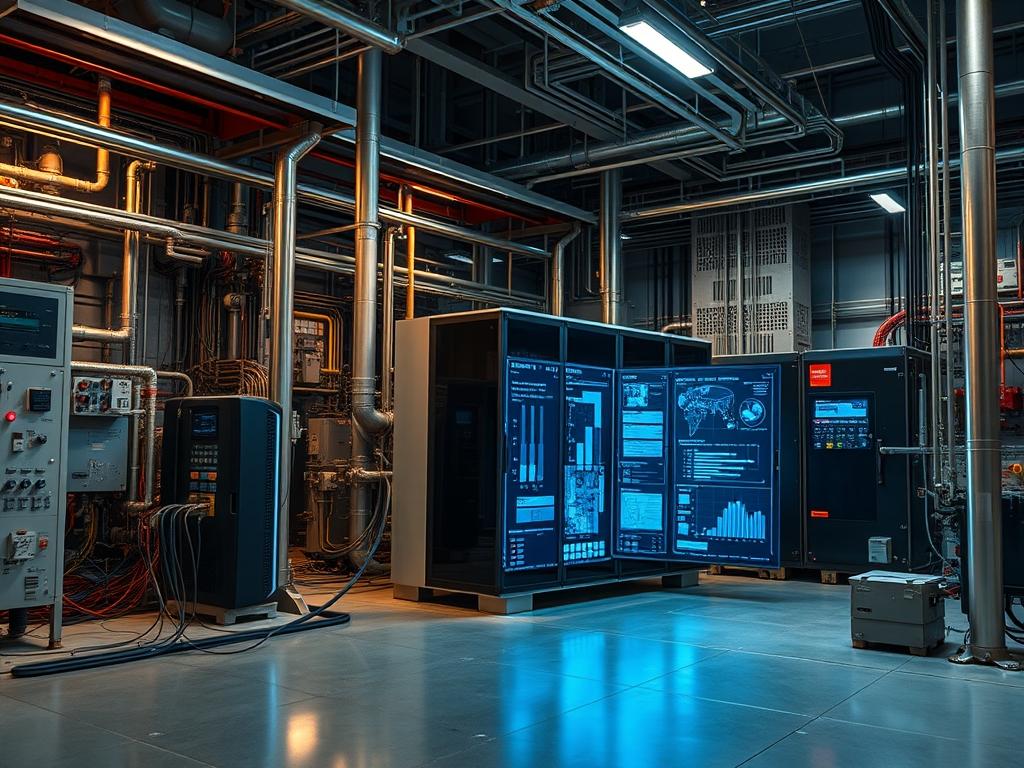
Overview of Critical Electronic Protection Features in Controllers

Electronic Protection Features

Industrial controllers and power management units utilize Electronic Protection Features to preserve hardware integrity against electrical anomalies and thermal events. These features serve as a vital abstraction layer between raw electrical inputs and sensitive logic gates. In industrial automation and high density server environments, these protections mitigate risks associated with over-voltage, short circuits, and reverse … Read more

Using Built In USB Port Output Management for Mobile Devices

USB Port Output Management

USB Port Output Management serves as the critical hardware abstraction layer responsible for regulating electrical current and data throughput between mobile device terminals and host controllers. Within industrial or enterprise infrastructure, this system prevents thermal runaway and battery degradation by enforcing strict power delivery profiles and duty cycles. The management layer resides between the physical … Read more

Optimizing Memory Usage with Custom Data Logging Intervals

Data Logging Intervals

Data Logging Intervals define the temporal resolution at which telemetry is captured from field instrumentation and persisted to time-series databases or distributed ledgers. These intervals function as a governor for system throughput: they dictate the frequency of ADC polling, packet encapsulation, and network transmission. Within industrial control systems, water treatment facility monitoring, or cloud-scale telemetry … Read more

Setting Up a Remote Display Installation for Concealed Controllers

Remote Display Installation

Remote Display Installation serves as the primary visualization layer for headless compute units or high-security industrial controllers situated in restricted access zones. By decoupling the display surface from the execution hardware, engineers protect sensitive logic units within hardened, environmentally controlled, or physically concealed enclosures while providing localized telemetry via Thin Clients or Human Machine Interface … Read more

Managing Risks in Legacy Positive Ground System Hazards

Positive Ground System Hazards

Positive ground systems, primarily utilized in -48V DC telecommunications and industrial cathodic protection environments, utilize the positive terminal as the common reference point connected to the local earth or chassis ground. This architecture effectively mitigates the risk of electrolytic corrosion in subterranean copper conductors by maintaining the transmission medium at a lower potential than the … Read more

Implementing a Standard Negative Ground System Design

Negative Ground System Design

Negative Ground System Design serves as the fundamental architecture for DC power distribution in modern data centers, industrial automation, and telecommunication facilities. By connecting the negative terminal of the DC power source to the equipment chassis and the building ground electrode system, engineers establish a consistent 0V reference point. This architecture facilitates the use of … Read more

Matching Controller Amperage to Wiring Gauge Requirements

Wiring Gauge Requirements

The operational role of Wiring Gauge Requirements in DC power distribution and industrial automation defines the thermal ceiling and signal integrity of the entire infrastructure. In high-density controller environments, selecting the appropriate conductor cross-section is the primary mechanism for mitigating resistive heating and voltage drop. When a controller modulates current to actuators, motors, or sensors, … Read more

Ensuring Secure Connections with Proper Terminal Torque Specifications

Terminal Torque Specifications

Terminal Torque Specifications represent the critical mechanical constraint governing the integrity of electrical and signal pathways within high-density infrastructure. In power distribution units, busway systems, and industrial control cabinets, the application of precise rotational force ensures an optimal interface between conductors and termination points. This physical interface determines the electrical contact resistance (ECR), which directly … Read more

Maintaining Safety Distances for Wall Mounting Clearance

Wall Mounting Clearance

Wall Mounting Clearance defines the spatial requirements between hardware chassis surfaces and adjacent physical boundaries to ensure thermal stability, maintenance accessibility, and structural integrity. In high density deployments where compute or networking hardware is relocated from traditional floor racks to vertical wall mounts, the reduction in ambient air volume necessitates precise clearance metrics to prevent … Read more

Troubleshooting Ground Fault Detection Interruption in Charge Controllers

Ground Fault Detection Interruption

Ground Fault Detection Interruption functions as the primary safety gate between the Photovoltaic array and the DC battery bank or inverter bus. This mechanism is engineered to detect unintended paths between the high-voltage DC conductors and the equipment grounding conductor. In high-density power systems, Ground Fault Detection Interruption prevents thermal runaway, equipment fires, and personnel … Read more